ORIGINAL ARTICLE
PEREIRA, Olavo de Carvalho [1]
PEREIRA, Olavo de Carvalho. Limit calculation of a function without using  and
and  . Revista Científica Multidisciplinar Núcleo do Conhecimento. Year. 06, Ed. 08, Vol. 04, p. 05-31. August 2021. ISSN: 2448-0959, Access link: https://www.nucleodoconhecimento.com.br/mathematical-olympiads/limit-calculation, DOI: 10.32749/nucleodoconhecimento.com.br/mathematical-olympiads/limit-calculation
ABSTRACT
The consulted bibliography does not present, in any of the analyzed cases, a calculation of the limit of a function, but only “shows” that the values presented as the “limit” satisfy the definition of limit of a function expressed through inequalities involving  and
and  , there is, therefore, a gap in this theme, which the present article comes to fill by fundamentally using the concept of defined function, as well as by identifying the expression ”
  tends to a certain number” with a corresponding equality.
Keywords: Limit Of A Function, Limit Calculus, Lateral Limits, Infinite Limits, Limits At Infinity.
1. INTRODUCTION
This article presents the “calculation of limit of a function” in order to fill an existing gap in this subject.
The presentation of the calculation mentioned in the solution of several limits is the main objective of the article.
In a supplementary way, we intend to clarify the real need to calculate, or not, the limit of a function.
We will also discuss, in a very simple way, the case in which a simple function, defined at a certain number, is continuous at that number.
Although the geometric interpretation is always important, here we will only take an algebraic approach to the “limit calculus” presented.
1.1 CALCULATION OF LIMIT OF A FUNCTION
The definition of a function’s limit is presented in math textbooks as an estimate.
For example: Leithold (1994) presents the definition of a function’s limit as follows:
Seja  uma função definida para todo número em algum intervalo aberto contendo
  , exceto possivelmente no próprio número
  O limite de
  quando
  tende a
  será
será  , escrito como
 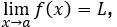 se a seguinte afirmativa for verdadeira:
Dado  qualquer, existe um
  , tal que, se
 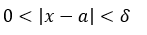 então
então  .‘‘
.‘‘
A definição acima afirma que os valores de  tendem a um limite
  quando
  tende a um número
  , se o valor absoluto da diferença entre
  e
e  puder se tornar tão pequeno quanto desejarmos, tomando
 suficientemente próximo de
  , mas não igual a
  .
.
Lezzi, Murakami and Machado (1991) express themselves as follows about the same definition:
Seja  um intervalo aberto ao qual pertence o número real
  . Seja
  uma função definida para
  Dizemos que o limite de
  , quando
  tende a
  , é
, é  , e escrevemos
 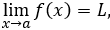 se para todo
  , existir
  tal que se
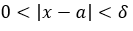 então
então 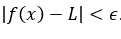 .
.
Munem and Foulis (1982) use the following definition:
Se  é uma função e
  é um número, entende-se a notação
 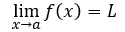 como “o limite de
  ” quando
 tende a
  é
é  isto é,
  se aproxima do número
  quando
  se aproxima de
  .
.
As can be seen from the above definitions, a limit is presented  just to satisfy the definition itself.
No calculation of this limit is presented at any time.
This article presents the “limit calculation” of a function that can be used in all cases where it is necessary to perform such an operation.
Now, on to the argument.
For some functions, not defined in a certain number, in order to know, with the maximum possible precision, what would be their value in that number, it is customary to evaluate them in values close to that number for which they are not defined.
Example:  set to all
  except
  .
.
If we replace the  by 1, we have the indeterminacy
  .
.
As the function is not defined, that is, it does not exist for the value 1, we evaluate, so, its value close to 1, since our objective is to know the value of the function, at least, close to 1, since it does not exist for  .
.
For values of , different from 1, greater or less than 1, but very close to 1, 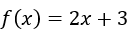 , so
, so will be equal to 1, and will have values close to 5, as we will see below:
Let’s assign to  the values
  , that is, we are taking values of increasingly closer to 1, but smaller than 1. The values of
  found are:
 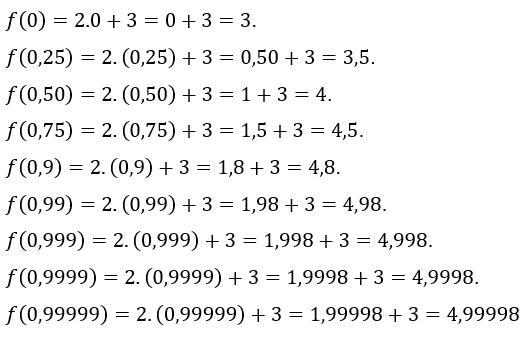 Now let’s assign the
  the values
  , that is, we are taking values of increasingly closer to 1, but greater than 1. The values of
  found are: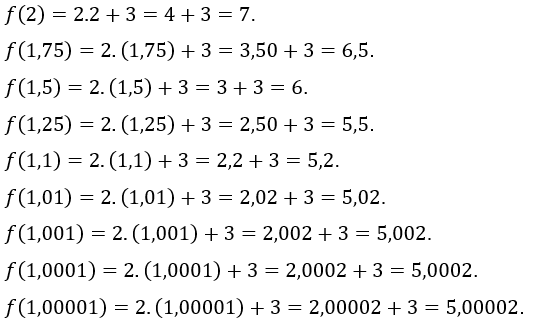
As can be seen, in both cases, as  approaches 1, approaches 5, leading us to believe that this is the limit of
  .
.
However, no limit “calculation” was made here, but only an evaluation of  , when
  takes values very close to 1.
So the value 5 is “candidate” to be the limit that we still need to calculate.
The consulted authors structure the definition of limit in terms of inequalities from examples like this and assume the estimated value, in this case 5, as really the limit of the function.
In this regard, they claim that 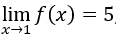 , because for any
  , no matter how small it is, there is a
  , such that if
 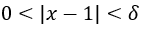 so
so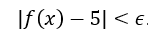 .
.
The limit definition given at the beginning, which has no limit calculation, is used to “prove” that given numbers, with no indication of where they were taken, are limits of functions.
We will show that the definition of limit does not prove, does not demonstrate, that a given number is the limit of a function, but only “shows” that the given number is the limit.
Let’s use an example to make the difference between a “show” and a “demonstration” clear.
- Show that 2 is the root of the equation
 .
.
This means that if we replace the  by 2, we will have zero as a result of the equation.
let’s see  .
.
This was an example of “demonstration”, that is, only something was shown, nothing was demonstrated, nothing was calculated, only the value provided was replaced.
It is different when you say: prove that 2 is a root, it is a solution of the equation 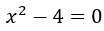 .
.
In that case, we have to calculate, solve the equation, and see if we get  .
.
Well, solving, we have: , soon  , and extracting the square root on both sides we have:
  , that is,
  or
or  .
.
Then one of the values of it really is 2.
With this, it was “demonstrated” that 2 is really the root of the equation 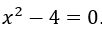 .
.
We will see, in the examples given below, that there is no proof, but only a “show” that the given number is the limit of the given function.
Example. Use the limit definition to “prove” that 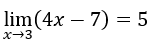 .
.
Here it is not said how the conclusion that the limit is 5 was reached, nor does it say where that number was taken from.
We will discuss, in general terms, the solution presented in the consulted books:
The first requirement of the definition is that  be defined on every number of some open interval containing 3, except possibly on 3. As
  is defined for all real numbers, any open interval containing 3 will satisfy this requirement. We need to show now that for all
  there is one
  , tal que se
 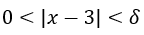 so
so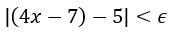 we have to
We have, so, 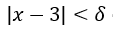 and
and 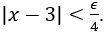
This statement indicates that  é um delta satisfatório.
With this choice of  we have the following argument:
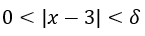 , so
, so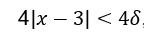 , so
, so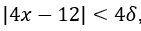 , so
, so , so
, so 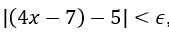 so
so 
This just “shows”, from the definition of limit, that 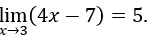
As we have seen, there was no proof, but only a “show”, since, given the number 5, we simply substituted it and the given function, in the definition of a function’s limit.
Let’s go to one more example: use the definition to “prove” that 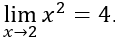 .
.
Again a number is given, in this case 4, as the limit, but it is not said where this number was taken from.
Here’s the solution, in general terms:
Like 
is defined for all real numbers, any open interval containing 2 will satisfy the first requirement of the definition.
We need to show that for all  , there is one
  , such that
If 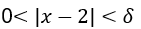 so
so 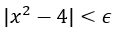
Soon 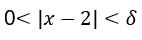 so
so 
We need to put a constraint on that gives us an inequality involving  . Such a restriction is made to select the open interval required by the definition. We choose the range
  and this implies that
  .
.
So 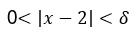 and
and  , so
, so  so
so 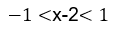 so
so 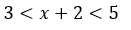 so.
so.
Now we have 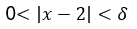 and
and 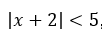 , so
, so 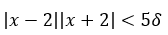 as our goal is to get
  , we must require
  With this
Using this  we have completed the so-called “proof”.
As we saw above, again nothing was proved, but only that the number given as the limit, in this case 4, satisfies the definition of limit.
There was no calculation to show that the number 4 is really the limit.
From this point on, we will present the limit calculus of a function.
Before presenting the “calculus” itself, let us evaluate  in the same values of
  given above, but considering them to be compounds of number 1.
This will show, in general terms, the reasoning used to calculate the limit of the function.
The function is 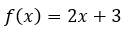 , valid for all
  .
.
For  or
or  we have to
For  or
or 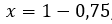 , we have to
For  or
or 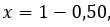 we have to
For  or
or 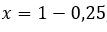 , we have to
For  or
or  , we have to
For  or
or 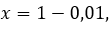 we have to
For  or
or 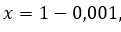 we have to
For  or
or 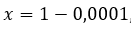 , we have to
For 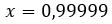 or
or 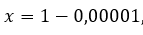 we have to

We tested some values of  less than 1.
Now we will evaluate  at values greater than 1 but close to 1.
For  or
or  , we have to
For or
or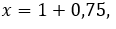 we have to
For or
or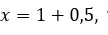 we have to
For or
or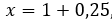 , we have to
For  or
or 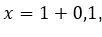 , we have to
For  or
or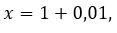 we have to
For  or
or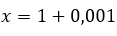 , we have to
For 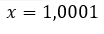 or
or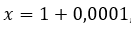 , we have to
For 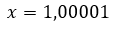 or
or , we have to

From the above, we realize that the more approaches 1, the more
 approaches 5, that is, when
  tends to 1,
  tends to 5.
We observed in the calculations above, in all the values assigned to , the appearance of a constant
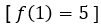 to which a value was added or subtracted, which tended to zero, as
  was approaching 1.
This constant is, therefore, a “candidate” to be the “limit” mentioned above, that is, there is an indication that we may have .
We will now express the situation above in a semi-generic way to present the “limit calculation” itself.
The expression “ tends to 1″, represented by
 , it’s equivalent to
 , ou
, ou  , when
 tends to zero,
  , e
, e  .
.
With this, the expression , replacing
  per
per or
or , it’s equivalent to
 , or
, or  , that is,
  , or
, or  .
.
From the above equality, it is possible to “calculate” the value of the limit of when
when  tends to 1, since it is enough to calculate the value of
 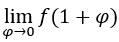 , or
, or 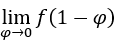 .
.
We will now do, using the same function as before, the calculation for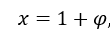 , when
  .
.
In this way, we are left with:
 then
then regardless of
  , and
, and  tends to zero when
 , that is, it is so small that it approaches zero as far as we like.
The calculation for  , that is,
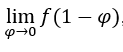 , is analogous and produces the same result.
let’s see:
We will now calculate a series of limits of functions, to exemplify the application of the mentioned “calculus”.
- Let’s calculate
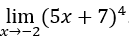 .
.
Like , we can do, for example,
 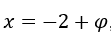 ,
,  and
and  .
.
Stay with 
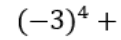 termos em
 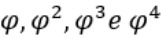 que tendem todos a zero.
Then the result will be 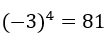
- Let’s calculate

Like  , we can do, for example,
 ,
,  e
e  .
.
Stay with
 ,because the numerator tends to 4 and the denominator tends to
 .
.
- Let’s calculate
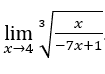 .
.
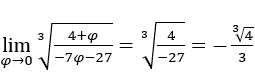
As we saw above, in the end we will be left with
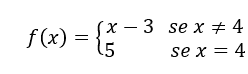
- Let’s calculate
 as below.
 .
.
We must calculate 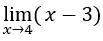 , because no matter what happens to
 when
when  .
.
Like  , we can do, for example,
 e
e  .
.
Stay with
 , then
 .
.
Be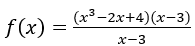 , set to all
 , except
  .
.
Let’s consider  that is,
  , for which
 reduces to
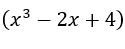 .
.
- Let’s calculate the
 . We have to
  , uma vez que, quando
  the expression
 tends to zero.
So
Now consider the following example: 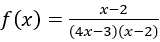 , set to all
  ,and calculate its limit when
 tends to 2.
For condition of existence of the function,
 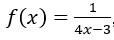 , and when
  we can do, for example,
  , with
 and we will have to calculate the limit
 .
.
Like  , the expression
 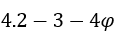 tende a
  , and the limit will then be
 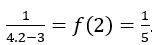 .
.
In conclusion, we are left with:  .
.
Observation.
We could have applied “calculus” directly to the function, without first dividing the factor common to the numerator and denominator.
let’s see
In fact, we can apply the “calculus” directly on the function, without first making a “preparation” on it.
We will now give some examples of limit calculation involving trigonometric and exponential functions in order to exemplify the consolidated above.
Let’s consider the function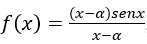 , set to all
  , except
Remembering:  means, for example, that
 , where
 ,
,  .
.
Substituting this value for x In the original equation above, we have:
Then,  and
and  are independent of
  it’s the
 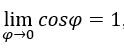 , while the
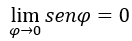 .
.
Another example: consider the function 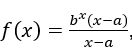 set to all
  , except
 .
.
- Let’s calculate the

- Making the substitution
 for, for example,
  , with
  ,
,  . We have:
  , because the
  is 1 and
  regardless of
 .
.
Now let’s calculate the limit of the functions given at the beginning to confirm the values of the limits given.
- Let’s calculate
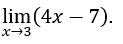
Like  , we can do, for example,
 ,
,  and
and and we are left with
- Let’s calculate

Like , we can do, for example,
 ,
,  and
and  and we are left with
As can be seen from the “calculations” above, the limits given in the previous examples were correct.
We will demonstrate just one theorem about limits to exemplify the calculus shown here.
Theorem if  and
and  are any constants, then
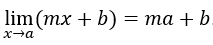 .
.
Just calculate the limit by doing, for example, 
 and
and
Stay with: , then
  tends to zero, since
  tends to zero.
There is an immense simplicity in the “calculation” presented.
In this case, there is no doubt that the limit is .
.
We will now use the presented “limit calculus” to compute limits of functions in various circumstances.
- Let’s calculate
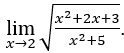
Like , so we can do, for example,
  ,
,  and
and 
Stay with since
since 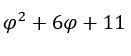 tends to 11 and
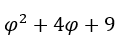 tends to 9.
- Let’s calculate
 .
.
Like x → 5, so we can do, for example, ,
,  and
and
Stay with 
It is observed that it was not necessary to “prepare” the function to apply the “calculus”, that is, it was not necessary to write the function as  and finally how
- Calculemos
 .
.
In cases involving radicals, to which a real number is added or subtracted, when the direct substitution of the value of  leads to indeterminacy
we have to prepare the equation, because the direct application of the “calculus” does not undo the indeterminacy, as we will see below.
What happens in this case is that there is a factor common to both the numerator and the denominator, but that is only expressed when we divide, either the numerator by the denominator, or the denominator by the numerator.
This currently translates into mathematics as rationalization.
Let’s see in the example above: if we divide the denominator by the numerator, since the exponent of  in the denominator is 1 and the exponent of in the numerator is smaller, that is, it is worth
  we will have:
 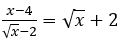 and substituting, we will have
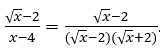 .
.
We are thus able to express the factor common to the numerator and denominator.
The other way is to divide the numerator by the denominator, but in this case, we must do the same thing is the rationalization, since the exponent of  in the numerator is less than the exponent of
  denominator, and therefore needs to be multiplied by a factor in to make its exponent at least equal to the exponent of the denominator.
This is the famous rationalization that we do.
We will do the calculation first, without preparation.
Like  , we can do, for example,
  ,
, and
and  .
.
Stay with  We observe the need to rationalize, as the limit is still undetermined when in the numerator and denominator, tending to
We will then multiply and divide by 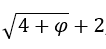 , and we will be with
Now we will do the calculation, preparing the function before applying it.
 .
.
How direct substitution of 4 leads to indeterminacy  , means that the numerator and denominator have as a common factor
  or
or 
In this case, as it is a radical minus a real number, the way used to “release” the common factor is through rationalization.
Before computing the limit, we will multiply and divide the numerator and denominator of the function by 
Stay with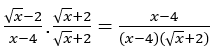 . In this function, we can already apply the calculus. let’s see: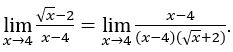
Like we can do, for example,
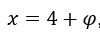 ,
,  and
and 
Stay with 
1.2 SIDE LIMITS
In cases where a function is defined for every real number except a real number , when we calculate its limit with the independent variable tending to
 , as in the examples given above, it does not matter whether we use
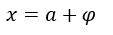 how much
  ,
,  e
e  , since it is set to all numbers to the left and right of
  .
.
And of course, this is not a sentence function.
When a function is not defined to the left or right of a number
 and we have to calculate its limit with
  tending to, we must use the value of as the case may be.
When  and we do
  or
or  ,
,  and
and  , so
, so  indicates that
 is approaching
  for values greater than
  ,and therefore is approaching on the right.
The calculation made with 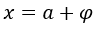 is, therefore, the limit when
  tends to
  on the right.
It is, therefore, the right-hand limit.
We use  to calculate the left-hand limit.
We know that the limit exists only when the one-sided limits exist and are equal.
- Let’s calculate
 √x – 4.
We know that the function exists only for  , that is,
Therefore, there is no left-hand limit and, therefore, the limit in question does not exist.
But there is the right-hand limit which can be calculated by substituting  per
per ,
,  e
e 

Be
- We calculate the side limits.


How are they the same,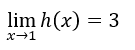
In the above calculation, we made  , to calculate the right-hand limit and
  to calculate the left-hand limit.
We calculate the limit of  defined by
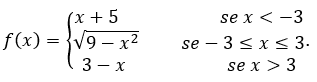
- Let’s calculate
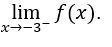
We must then calculate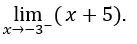
We will then do 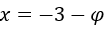 ,
,  and
and 
Stay with

- Let’s calculate
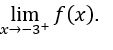
We must then calculate,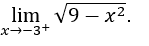
We will do it then, , e
Stay with

- Let’s calculate
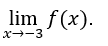
Like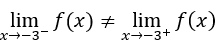 then the
  does not exist.
- Let’s calculate.
We must then calculate,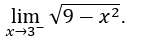
We will then do ,
,  And
And 
Stay with

- Let’s calculate
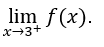
We must then calculate 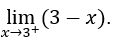
We will then do  ,
,  and
and 
Stay with

Let’s calculate
Like  , so exists and is equal to zero.
1.3 INFINITE LIMITS
Those whose functional values increase or decrease without limitation, when the independent variable gets closer and closer to a fixed number, can be solved equally by the limit “calculation” presented here, with the advantage of not having to worry about theorems.
Before applying the “calculation”, let us remember the following situations:

- Let’s calculate the following limit
 .
.
Like , we must do
  ,
,  and
and
Stay with  .
.
- Let’s calculate now
 .
.
Like , we must do
 ,
,  and
and 
Stay with  .
.
- Let’s calculate
 .
.
Like  , we must do
 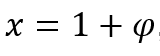 ,
, 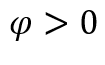 and
and 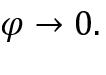
Stay with  , because the numerator tends to 2, while the denominator tends to zero through positive values.
- Let’s calculate now
 .
.
Like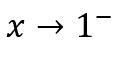 , we must do
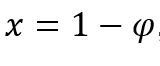 ,
, 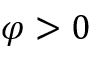 and
and 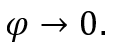
Stay with  , because the numerator tends to 2 and the denominator tends to zero through negative values.
- Let’s calculate
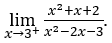
Like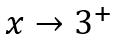 ,we must do
 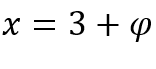 ,
, 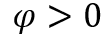 and
and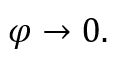
Stay with because the numerator tends to 14, while the denominator tends to zero for positive values.
- Let’s calculate now
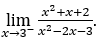
Like 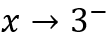 , we must do
 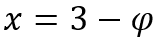 ,
, 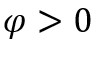 and
and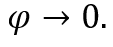
Stay with , since the numerator tends to 14, while the denominator tends to zero for negative values, since
  tends to zero always for positive values.
In this case the denominator is 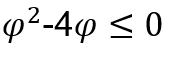 whenever
  , It is like
  , the denominator is always negative.
- Let’s calculate
 .
.
Like 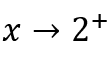 , we must do
 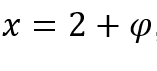 ,
,  and
and
We are like
 because the numerator tends to 2 and the denominator tends to zero for positive values.
- Let’s calculate

Like 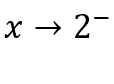 , we must do
 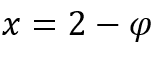 ,
, 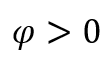 and
and 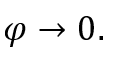
Stay with , because the numerator tends to -2 and the denominator tends to zero for positive values.
In these two cases, we were able to into the radical because it is always positive.
- Let’s calculate
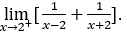 .
.
Like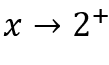 , we must do
 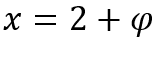 ,
, 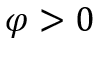 and
and 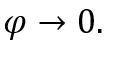
Stay with  because the numerator tends to 4, while the denominator tends to zero for positive values.
Note We could have directly substituted the value of in the original equation.
- Let’s calculate
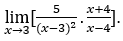
Like , we must do
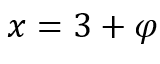 ,
, 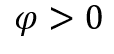 and
and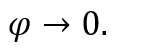
Stay with , because the numerator tends to 35, while the denominator tends to zero for negative values, since is negative for < 1.
- Let’s calculate
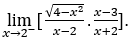 .
.
Like , we will do , and
Stay with 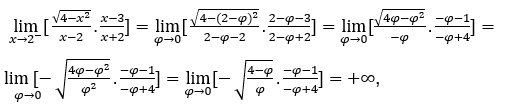 , because the numerator tends to
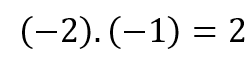 and the denominator tends to
 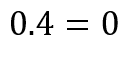 by positive values.
1.4 LIMITES NO INFINITO
In the same way as for the limits mentioned so far, the literature consulted also does not present a calculation of limits at infinity, but only evaluates the function when the independent variable increases or decreases indefinitely.
The evaluation result is used as the threshold.
Let’s see.
Given the function , we attribute to
 the values
 and so on, allowing it to grow indefinitely. The corresponding functional values will be

We observe that when  grows, taking positive values, the functional values approach 2.
When an independent variable grows indefinitely, through positive values, we write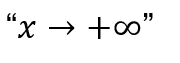 the example given, the conclusion was drawn that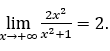
As seen above, from the given example, no limit calculation of the function was presented, but it was only observed that, as
increased, by positive values, the function approached 2.
This value 2 was then used as the limit of the function.
We will present, below, the “calculation” of limit of functions when the independent variable tends to or the
In cases where 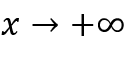 , we will do
 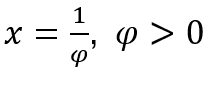 and
and , because, as we saw above, when
  tends to zero for positive values,
 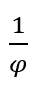 tends to
 ,and with that,
 tends to
In cases where 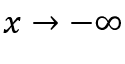 , we will do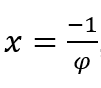
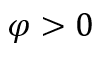 and
and , because, as we saw above, when φ tends to zero for positive values
 , tends to, and with that,
  tends to
 .
.
- Let’s calculate
 .
.
Like 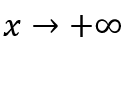 , we will do
 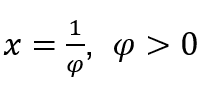 e
e 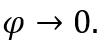
Stay with
 because the numerator tends to 2 and the denominator tends to 1.
- Let’s calculate
 .
.
Like 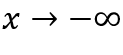 , we will do
 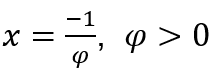 and
and 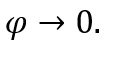
Stay with because the numerator tends to 2 and the denominator tends to 1.
- Let’s calculate

Like 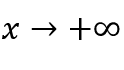 , we will do
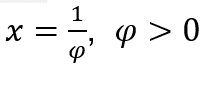 and
and
Stay with , because the numerator tends to 4 and the denominator tends to 2.
- Let’s calculate
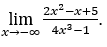
Like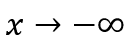 , we will do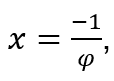
 and
and 
Stay with because the numerator tends to zero and the denominator tends to -4.
- Let’s calculate

Like 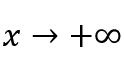 , we will do
 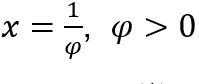 e
e 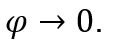
Stay with , because the numerator tends to 3 and the denominator tends to
- Let’s calculate
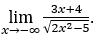
Like , we will do and
Stay with ,because the numerator tends to -3 and the denominator tends to √2.
- Let’s calculate

Like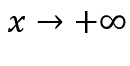 , we will do
 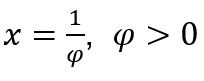 and
and 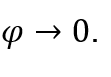
Stay with because the numerator is 1 and the denominator tends to zero for positive values.
- Let’s calculate

Like  , we will do
  =
=  φ > 0 and φ → 0.
Stay with because the numerator tends to -1 and the denominator tends to zero for positive values.
- Let’s calculate

Like, we will do and
Stay with  because the numerator is 1 and the denominator tends to 1.
- Let’s calculate now

Like 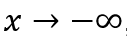 , we will do
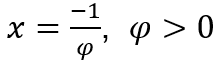 and
and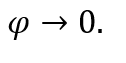
Stay with , because the numerator is -1 and the denominator tends to 1.
- Let’s calculate

Like  , we must do
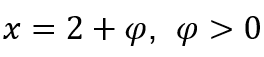 ,
, 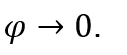
Stay with  , because the numerator tends to
 and the denominator tends to zero for positive values.
- Let’s calculate now
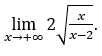
Like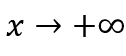 , we will do
 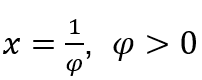 and
and 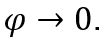
Stay with  because the numerator tends to 2 and the denominator tends to 1.
Observation.
Calculation of limits at infinity cannot be applied, for example, to trigonometric functions, since some of them vary in a certain interval, and others increase or decrease indefinitely, depending on the value considered.
For example, if we tried to calculate the , we would go through all the values of the range infinite times
  , because, for all
  ,
, 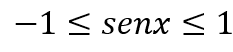 , that is, we would not arrive at any definite value.
Indeed, polynomial functions, or functions expressed by ratios between polynomials, are the most suitable for applying limits.
2. OBSERVATIONS
1) The limit calculation presented arose from the identification of the expression tends to a certain number
  with equality
 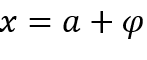 , or
, or 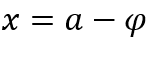 , with
  and
and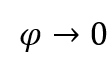 ,since, really, when
 ,
,  e
e  tend to
 and with that,
 tends to
In the case of limits at infinity, the substitution for the expression  tends to
  was
was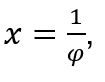 , and a replacement for an expression
  tends to
  was
was 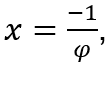 , with
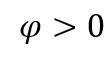 and
and 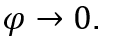
The substitution makes the most sense, because, really, when  , always for positive values,
 tend
tend e
e  tends to
 , making
  really tend to
  or the
  , as the case may be.
If we substitute, in the case where  tends to
 or the
  the
the  per,
per,  or
or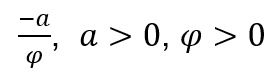 and
and , the result would be the same.
An example.
- Let’s calculate
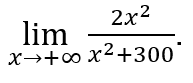
we will do 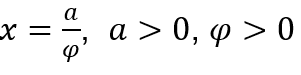 e
e 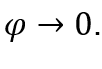
Stay with

2. As seen in the various examples, the “limit calculus” presented is quite “fluent” and of direct application, without the need to consult theorems or to “organize” the function before performing the calculation, except when we have to rationalize.
This fact brings a lot of tranquility when calculating the limit of a function, as the “calculation” presented is a true synthesis of this subject.
For example, “calculation” can be used directly over the function
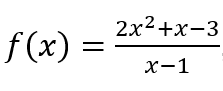 , without the need to organize it, that is, to express it as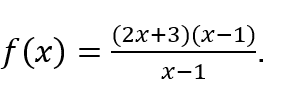
Let’s see 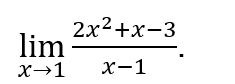
Like , we can do, for example,
 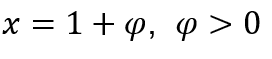 and
and 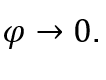
Stay with

This brings an enormous advantage over the current presentation of this subject, which, in addition to not presenting any limit calculation, is shown to be quite “stuck” by the immense amount of theorems that must be considered in the “evaluations” of limits, as well as of the “organizations” , that must be done on the functions before “estimating” their limit.
3) I would like to add, to the “limit calculation” presented, some evaluations of a practical nature.
a) It only makes sense to calculate the limit of a function close to a value for which it is not defined.
If the function is defined for a certain value, that is, if the function exists for a certain value, it makes no sense to calculate the limit near that value, since we know how much the function is worth at that value.
For example, be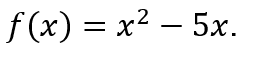
This function is defined for all  , it exists for everyone
Therefore, it would be unreasonable to calculate, for example,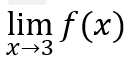 , since the function exists for
 , that is, why calculate this limit if we can simply substitute
  by 3 in
  and we get the value of the function at 3, that is,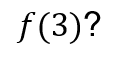
With this, hundreds of exercises no longer have a reason to exist.
Obviously the functions considered in this article are of 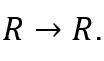
b) By using the concept of limit, we will make an observation here about continuity of a function.
According to Lethold’s calculus book (1994), the definition of a continuous function at a point translates as follows:
Dizemos que a função  é contínua no número a se e somente se as seguintes condições forem satisfeitas:
(i)  existe;
(ii) 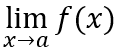 existe;
(iii) 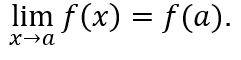
Se uma ou mais de uma dessas condições não forem verificadas em  , a função
 será descontínua em
So Lima (1978) defines continuity of a function:
Uma função 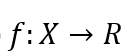 diz-se contínua no ponto
  quando é possível tornar
  arbitrariamente próximo de
  desde que se tome
  suficientemente próximo de
Em termos precisos, diremos que 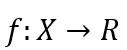 é contínua no ponto
  quando, para todo
  dado arbitrariamente, pudermos achar
 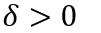 tal que
  e
e 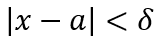 impliquem
We know that if a function is defined on a certain interval, that is, if it exists for every number contained in a certain interval, then there is no point in computing the limit of that function for some number in that interval, since we can simply evaluate the function on every number in that range.
In simpler terms: if a function, represented by just one expression, by just one sentence, exists for a certain number  then it is totally unnecessary to calculate the limit of the function for
  , since, simply, we can calculate the value of the function in
Of course, if we were to calculate this limit, as we did above, it would be 
As stated above, it only makes sense to calculate the limit of a function around a number for which it is not defined.
Therefore, if we are analyzing functions represented by only one expression, saying that a function exists for a certain number  , means that there is a limit of this function in this limit being the value of the function in
  , and with that we don’t need to calculate the limit of this function in that number
Applying this to the above definition of a continuous function, items (ii) and (iii) of the definition will become unnecessary, since in item (i) it is stated that exist.
Therefore, for functions represented by “just one expression”, the simple statement that it, the function  , is defined in a number
  that is, the simple statement that
  exists is enough to conclude that the function is continuous at that number
Likewise, with this observation about continuous functions, hundreds of exercises lose their raison d’être.
Example: let the function 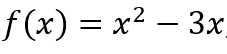 which is defined for every real number, that is, it exists for every
  real.
real.
Thus, there is no need to calculate the limit of for no value of
  , because in this case, be defined in
  is synonymous with having a limit in and that this limit is equal to the value of the function in considered.
Then the function  is continuous for all
3. CONCLUSION
In the above, we show that, in fact, the theory of limits is deficient in relation to a calculation of limit and, therefore, it surrounds itself with a series of arguments based on the definition of limit in order to fill this gap.
We then present the “calculation of the limit of a function” and show that it synthesizes all the mentioned subject, having, therefore, direct application.
We hope to be contributing to a better understanding of such a fundamental subject in mathematics.
REFERENCES
IEZZI, Gelson; MURAKAMI, Carlos et all. Fundamentos de Matemática Elementar, vol. 8, 1991.
LEITHOLD, Louis. O Cálculo com Geometria Analítica, vol. 1, 1994.
LIMA, Elon Lages. Curso de Análise, vol. 1, 1978.
MUNEM, Mustafa A. e FOULIS, David J. Cálculo, vol. 1, 1982.
[1] Graduate, bachelor’s degree in mathematics, from the University of Brasília.
Sent: June, 2021.
Approved: August, 2021.