ORIGINAL ARTICLE
SILVA, Bruno Campos [1]
SILVA, Bruno Campos. A study on thought diversity in marketing professional hiring and its impact on the innovation process. Revista Científica Multidisciplinar Núcleo do Conhecimento. Year 10, Issue 12, Vol. 03, pp. 45-77. December 2025. ISSN: 2448-0959. Access link: https://www.nucleodoconhecimento.com.br/business-administration/marketing-professional, DOI:10.32749/nucleodoconhecimento.com.br/business-administration/marketing-professional
ABSTRACT
The article proposes a study on diversity of thought within the hiring stages of new marketing professionals in the Brazilian market, linking this diversity to the innovation and disruption processes within Brazilian companies. A mixed-methods approach was chosen, comprising quantitative research on job postings published on the LinkedIn platform and an online survey with executives who hired marketing professionals within the last 12 months. We analyzed market research, proprietary quantitative data, and interviews with industry leaders to understand whether the behaviors and findings showed linearity and how to explain the studied phenomenon. One of the main challenges in social research—including recent studies on innovation—is the high complexity of human relations and leadership dynamics within organizations. The study also seeks to foster a reflection on the ESG process, which is currently widely discussed and faces significant socioeconomic pressure (from society and the B3 stock exchange); however, we shed light on the important topic of thought diversity within the innovation and disruption processes in both traditional companies and startups. Despite all the academic theory—including in widely accepted corporate journals—presenting studies that affirm both types of diversity (ESG and plurality of thought) are crucial to the corporate innovation process, our collected data revealed a bias, sometimes unconscious, that prioritizes professionals with previous experience in the hiring company’s sector. In Brazil, studies on this topic are still underexplored, both in practice and in theory, regardless of the sector. This approach, however, could be applied to any industry considered traditional.
Keywords: Disruptive Innovation, Marketing, Diversity and Inclusion.
1. INTRODUCTION
In 1979, Burrell and Morgan (2017) wrote about the difference between the deterministic and voluntaristic perspectives, where human beings tend to think based on what they know of reality and, consequently, seek out people who think and behave in alignment with concepts familiar to them. In contrast, innovation and challenging the “status quo” come from bringing in thoughts that are dissonant with what a specific group of people thinks, usually triggered by one or more individuals from a different background than the original group. It is impressive how a work originally written in 1979, as classic as it may be, manages to be so current when we look at Diversity and Inclusion, a priority for 9 out of 10 companies today. Determinism predicts that man reacts to his environment and the people around him, while voluntarism states that man has freedom of thought and action independent of the environment (Burrell and Morgan, 2017). Diversity and inclusion advocate that by hiring people from different ethnicities, sexual orientations, religions, and colors, companies have a better chance of harboring divergent opinions, which can generate a greater capacity for innovation and problem-solving.
The acronym ESG, derived from Environmental, Social, and Governance, designates a set of practices adopted by organizations aimed at integrating economic performance with socio-environmental responsibility and principles of corporate governance. This is a sustainability-oriented model that proposes value generation in an ethical, transparent manner, committed to positive impacts on the environment, society, and the institutional management structure. It has entered the corporate radar and become an important part of investor reports for publicly traded companies (Totvs, 2023). ESG has become an increasingly relevant factor for investors, consumers, and other stakeholders, who are more and more attentive to the sustainable and responsible practices of corporations. Companies that adopt a proactive approach toward ESG tend to stand out in the market, attract investment, improve their reputation, and create long-term value. The subject has gained prominence in Brazilian society and the financial sector, so much so that the São Paulo Stock Exchange (B3) launched the B3 Diversity Index. The indicator measures the level of gender diversity in companies listed on the São Paulo Stock Exchange, B3. This index was created with the goal of promoting gender equality and encouraging companies to adopt more inclusive practices regarding diversity. To be part of the B3 diversity index, companies must meet specific criteria related to the presence of women in leadership positions and on boards of directors. Factors considered include, for example, the proportion of women in senior management positions, on the board of directors, and on executive committees (B3, 2025).
In a country like Brazil, it is important to note that gender equality is not the only issue. In the 2022 census, 45.3% of Brazilians declared themselves as Black or Mixed-race (pardos), compared to 43.5% who declared themselves as White; for the first time, we have a majority population that openly identifies as Black or Mixed-race (Belandi and Gomes, 2022). This means that to truly practice diversity and inclusion in Brazil, it is necessary to look closely at the presence of Black and Mixed-race people within the workforces of Brazilian companies. The reality in this regard falls well short of the ideal. Only 5.8% of executive roles in Brazil are occupied by Black or Mixed-race individuals, and even when considering the entire workforce across all hierarchies, the number is 31.5%—12 percentage points below the representative percentage of the Brazilian population (Crispi, 2023). In a sea of challenges, there is another facet of diversity that does not currently rest among companies’ priorities, given the existing gaps on other fronts: diversity of thought. Frei and Morris (2023), in a Harvard Business Review article, wrote about the importance of all types of talent—not just the diversity championed in ESG forums, but also that of knowledge, thought, and opinion—and the importance of taking all of this into account when hiring and promoting.
While on one hand there is progress (even though the gap is huge and there is much to be done) under the ESG prism, I would like to explore in this article the diversity of thought within companies, especially in marketing departments. The marketing area should find it easier to generate diversity of thought and knowledge; after all, it is an area in contact with the world outside the company—marketing, theoretically, has great contact with the consumer. This article proposes to investigate the status of thought diversity in these departments. The objective of this data collection aims to answer the following research questions: (1) Is there a conscious bias in requiring previous industry experience when hiring marketing professionals? (2) Could this bias hinder the process of change and innovation within companies’ marketing departments?
To achieve this objective, two studies will be conducted: (1) using LinkedIn and its job postings section, we will observe how many marketing jobs in Brazil require previous experience in the industry where the company operates; (2) an online survey with professionals who have hired a marketing professional within the last 12 months. The methodology chosen for this research will be mixed-methods, using quantitative and qualitative data to analyze the proposed study. Although there are several articles (both national and international) on diversity and inclusion within the ESG spectrum, little academic literature was found addressing diversity of thought, particularly with a focus on two specific areas such as marketing, which presents an opportunity to bridge practice and empirical theory, contributing to both fields.
2. THEORETICAL FRAMEWORK
2.1 THE BEGINNING OF THE DIVERSITY & INCLUSION PROCESS IN MARKETING DEPARTMENTS
The diversity and inclusion movement within the marketing departments of Brazilian companies has gained prominence in recent years as a response to demands for representation and equality in a social context that is increasingly plural and conscious of the importance of diversity. This movement reflects not only an ethical and moral concern but also a growing understanding that diversity can bring tangible benefits to organizations (Pinho, 2022).
In the context of marketing, diversity and inclusion are fundamental for a deeper and more effective understanding of consumers, who are increasingly diverse in terms of gender identity, sexual orientation, ethnicity, and social class, among other aspects. However, the presence of professionals with different backgrounds and experiences in marketing departments—who could contribute to the revitalization of knowledge and to innovation—is sometimes not as highly valued as that of professionals who have already worked within the company’s specific industry sector. Diversity in marketing departments can stimulate innovation and creativity by bringing diverse perspectives and insights that can inspire new approaches and solutions to communication and public engagement challenges.
The topic of diversity and inclusion is relatively new to society. The inclusion of quotas for minorities in public universities only began in 2012, with the law reserving at least 50% of vacancies in public institutions of higher and technical education for public school students, which are filled by self-declared Black, Mixed-race (pardos), and Indigenous candidates (Mec, 2015). Although successful, if we apply an average duration of 4 years for professional graduation, the market only began receiving these new, more diverse professionals in 2016. Furthermore, the majority of the 12.9 million university students (2023 figures) are still White and attend private colleges, where there are no quotas or active incentives for diversity (Mariuzzo, 2023). Nevertheless, it is worth noting that we are evolving in this regard, as demonstrated by FIGURE 01, which displays the Semesp Institute data on ethnography in Brazilian higher education in 2022:
Figure 01: Semesp Institute Data

Another point to consider is how marketing departments express themselves to their consumers. Today’s advertising must also reflect diversity regarding the society in which it is embedded. Comparing campaigns from the 1990s with current ones is a good exercise to observe the evolution (albeit slight) of what we call politically correct advertising—that is, addressing diversity in ethnicity, religion, sexual orientation, and gender, among other aspects. [Author Name] analyzes this change by focusing on advertisements from the Italian brand Benetton, offering a critique of companies that introduce this diversity almost as an imposition by society and stakeholders, primarily the capital market and clients (Rachinhas, 2023). However, the author acknowledges that progress has been made on this issue both internationally and nationally.
2.2 THE CONFLICT BETWEEN INNOVATION AND DIVERSITY OF THOUGHT
The importance of diverse environments for marketing innovation lies in their capacity to stimulate creativity, generate distinct insights, and promote a broader, deeper understanding of consumers. Diverse environments bring together individuals from different backgrounds, experiences, perspectives, and skills, which can result in more innovative and effective solutions to the challenges of communicating and engaging with the target audience. In this case, however, another type of diversity plays a central role: diversity of thought. Milgrom and Roberts (1994) highlight issues of principal-agent microeconomics, noting that principals (executives) are often more concerned with hitting quarterly goals established by the agents (capital owners) to secure their incentives—usually in the form of bonuses—than with innovating and thinking about the future. This behavior contributes to an avoidance of any mechanism that challenges the status quo, such as bringing in a CMO (Chief Marketing Officer) who has never worked in the company’s specific sector to drive a transformation.
Aligning discourse with practice is a challenge. An article from the MIT Technology Review (2023) highlights research by the consultancy firm Accenture, showing that 68% of leaders claim they are creating a diverse environment conducive to innovation, yet only 36% of employees share this perception. In the article, iFood’s president, Gustavo Vitti, highlights how diversity—accelerated during and after the pandemic by remote work—was essential for the acceleration of Brazil’s largest delivery app. Learning and testing are keywords for corporate innovation, but sometimes it is necessary to enforce the need for innovation and diversity rather than merely writing about them in investor reports.
Innovation, however, possesses specific characteristics. Kahn (2018) classifies innovation into three types: (1) innovation as an outcome, which emphasizes the process’s output, usually focused on products, marketing, processes, and organizational changes; (2) innovation as a process, where it is organized across all departments but primarily focused on new products; and (3) innovation as a mindset, which refers to innovation internalized within teams and individuals, fully supported so that the team can propose something new. Innovation as a mindset appears to have a strong connection with both traditional diversity and diversity of thought. To manifest this mindset, certain key conditions are required: associating and connecting problems and ideas, questioning the status quo, observing consumers, suppliers, and competitors, experimenting with insights, and networking with people of different thoughts and ideologies (Kahn, 2018). It is precisely this innovation process that demands an open mind from recruiters and hiring managers to revitalize their marketing departments with people from the most diverse types of experiences and cultures—a process facilitated today by remote work (Home Office), which allows hiring individuals from regions far from São Paulo, the country’s economic hub.
3. METHODOLOGICAL APPROACH
The research process followed a mixed-methods approach, utilizing both quantitative and qualitative data. For the quantitative data, primary data was collected—which consists of information gathered directly from an original source through specific research methods such as interviews, questionnaires, direct observations, and experiments, among others. Data of this nature is obtained for the first time and has not undergone any previous analysis or interpretation. This constitutes the quantitative portion of the research. In the qualitative portion, open-ended questions from the online survey were utilized with professionals who had hired staff within the last 12 months. When working with interpretative secondary data, researchers must remain aware of their own positioning and perspectives, as well as the potential influences that may shape their interpretations. Transparency, reflexivity, and an openness to different viewpoints are fundamental to ensuring the quality and validity of the analyses performed (Cassel, 2018).
In the research process, three stages were applied: 1) “third-person” quantitative rigor regarding data collected in the past—this data being the database of LinkedIn job postings between January and April 2024 and an online survey with hiring decision-makers who hired within the last 12 months; 2) our own “first-person” action investigating acts that influence the future social vision, strategies, performance, and evaluations within our sphere of influence regarding the bias toward hiring individuals without previous experience in the sector (Torbert, 2000).
3.2 QUANTITATIVE RESEARCH: LINKEDIN MARKETING JOB POSTINGS BETWEEN JANUARY AND APRIL 2024
The first part of the research involved using LinkedIn. LinkedIn is a professional social networking platform widely used in Brazil, as well as in many other countries worldwide. With over 59 million users in Brazil, LinkedIn ranks fourth among the most relevant networks in the country (Lisboa, 2023). Recent studies show that using LinkedIn to recruit for administrative and executive corporate roles has proven to be the most efficient way to reach top candidates. The platform is chosen as the best by both sides: recruiters, to find the best talent, and candidates, who understand that the American social network is the best and most reliable source for job openings in the market (Choinoski and Lima, 2022).
Consequently, we used the tool to conduct a third-person quantitative analysis—that is, looking strictly at the raw data without interpretation. Between January and April 2024, the tool displayed an average of 12,724 job openings for marketing departments in Brazil. This number is considered our universe, which is the first step toward calculating our research sample. Next, the margin of error was defined at 5% and the confidence level at 95%. A margin of error of 5 percentage points is considered accurate for samples at the level we are researching, as well as acceptable for research in the applied social sciences field. A 95% confidence level establishes that if we repeat this study 100 times, it will yield the same result at least 95 times. The calculation for the sample to be researched is shown in FIGURE 02:
Figure 02: Research Sample Calculation

To reach an answer as to whether or not recruiters were requiring previous industry experience, we examined the job descriptions and determined that any reference to prior experience within the hiring companies’ operating segment would be classified as “YES.” This reference could be either direct or indirect. If there was no reference to previous experience in the hiring company’s sector, it was classified as “NO.” After analyzing 373 job openings, randomly selected from the universe, it was found that 65% of the advertised positions required previous experience in the hiring company’s industry segment. The researched database and analyses are contained in APPENDIX 01 of this article.
3.2 ONLINE SURVEY WITH MARKETING HIRING MANAGERS
3.2.1 CALCULATION OF THE REQUIRED SAMPLE
One challenge was finding the exact number of marketing professionals in Brazil. To arrive at an approximate universe, we collected the following data: (1) the number of active corporate tax registrations (CNPJs) listing advertising, publicity, or marketing within their scope of activity; (2) the distribution of these CNPJs across Brazil, highlighting the main cities. With this data, we could estimate an approximate universe of professionals to determine the sample size.
For this purpose, we utilized the survey “Marketing in Focus: Unveiling the Marketing and Communication Market in Brazil in 2023,” conducted by the Cortex Institute in partnership with the Mundo do Marketing portal. The survey presents the following characteristics and methodology: in this report, data from Marketing and Communication companies were mapped, including total active CNPJs, company size, revenue, National Classification of Economic Activities (CNAE), and digital presence and technology adoption indexes. Additionally, the study includes an overview of open job positions and a survey of the most widely used marketing technologies by companies.
In FIGURE 03, we understand how many CNPJs are involved in activities linked to Marketing and Communication; furthermore, we observe an expansion trend within the sector:
Figure 03: Companies Offering Services Linked to the Marketing and Communication Field

In FIGURE 04, we find the distribution of these companies across the national territory:
Figure 04: Top 10 Cities with Active Companies in the Marketing and Communication Fields

With this, we were able to estimate an approximate sample size using the total number of CNPJs as our universe. Applying the same statistical rigor used for the LinkedIn data collection, we arrived at the minimum sample size of respondents required for the online survey, as shown in FIGURE 05. Care will be needed to ensure the respondents align as closely as possible with the demographic distribution mentioned above in FIGURE 02. The complete survey is available in APPENDIX 02:
Figure 05: Minimum Sample Size Calculation for the Online Survey
| Population Size | Confidence Level | Margin of Error | Sample |
| 162000 | 90% | 7 | 139 |
Source: LinkedIn Job Research Database, 2023.
3.2.2 ONLINE SURVEY RESULTS
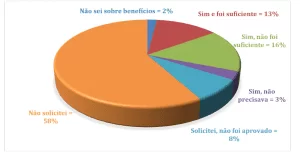
The online questionnaire (APPENDIX 03) was conducted between February 2, 2024, and July 2, 2024, with a total of 159 respondents, which meets the minimum number of participants required to achieve our confidence level and margin of error. The survey filters for respondents who were involved in a marketing recruitment process within the last 12 months (80% of respondents fit this profile). The distribution across sectors was also balanced in the sample, with a majority of 38.46% belonging to advertisers, which are characterized as more corporate environments. Most of the database is located in the State of São Paulo, matching the geographic concentration of the job openings. A total of 61% of the professionals stated that prior experience is crucial for hiring a professional, which aligns with the quantitative LinkedIn sample where 65% of the openings required prior industry experience. However, when asked whether the chosen professional actually had experience in the sector, 50.8% answered no. The absolute majority of hiring managers (88% ) responded that they would hire a professional without industry experience; nevertheless, 55% stated that experience is important for the final decision. The complete survey is available in APPENDIX 04.
4. CONCLUSION
The data collected from both the LinkedIn sample and the online survey with marketing hiring managers reveal similarities, showing a tendency to voice an understanding that diversity of thought is important, while in practice maintaining a more conservative stance against betting on talent without prior experience in the sector. The research was unable to break down the differences in this gap regarding specific sector experience across different hierarchical levels; it is hypothesized that the more senior the position, the more critical sector experience becomes. However, if this is the case, Milgrom and Roberts (1994) would explain it through the principal-agent conflict: since the agent, in the interest of achieving annual or quarterly results to secure incentives provided by the principal (in the form of bonuses), would have less interest in training an employee without industry experience, prioritizing immediate results from their executive leadership instead.
The behavior in question may protect current-year bonuses, but it leaves room for mid- and long-term disruptions. Both Christensen (2015) and Teixeira and Piechota (2019) agree that a mindset focused solely on short-term goals, without looking at technological innovations and shifts in consumer behavior, can pave the way for new entrants. Focusing exclusively on professionals with the same background as existing employees within the company limits the revitalization of new ideas and innovation itself. If Netflix, at the beginning of its growth, had restricted its hiring solely to professionals from Blockbuster, would it have reached the streaming innovation? Or if Airbnb had centered its recruitment efforts on executives from major hotel chains, would that have restricted Airbnb’s innovation process? (Teixeira and Piechota, 2019).
The study published here is limited by not having access to internal company workforces to verify the actual percentage of executives or entry-level professionals who possess or lack prior industry experience. Without this data, we remain at the surface level of intentions and what is made public during the hiring process. Another metric that would be crucial for a deeper study would be understanding the filters applied by Human Resources tools during selection processes. Does the “prior industry experience” filter block professionals without experience entirely, or does it grant them the opportunity to speak with interviewers and present what new perspectives they could bring to the company? Or, even when reaching the interview stage, is the final decision—often made by the department manager rather than the recruiter—ultimately influenced by industry bias? It would be valuable to see a more detailed study on this, particularly from firms specializing in organizational climate and strategic research.
REFERENCES
BURRELL, Gibson; MORGAN, Gareth. Sociological Paradigms and Organizational Analysis: Elements of the Sociology of Corporate Life. Routledge, v. 3, f. 224, 2017. 448 p.
BELANDI, Caio e GOMES, Irene. Censo 2022: pela primeira vez, desde 1996, a maior parte da população do Brasil se declara parda. IBGE. Brasília, 2022. 1 p. Disponível em: https://agenciadenoticias.ibge.gov.br/agencia-noticias/2012-agencia-de-noticias/noticias/38719-censo-2022-pela-primeira-vez-desde-1991-a-maior-parte-da-populacao-do-brasil-se-declara-parda. Acesso em: 14 abr. 2024.
IDIVERSA, B3, Indices de Sustentabilidade e Diversidade da B3. B3. São Paulo, 2025. 1 p. Disponível em: https://www.b3.com.br/pt_br/market-data-e-indices/indices/indices-de-sustentabilidade/indice-de-diversidade-idiversa-b3.htm. Acesso em: 27 set. 2025.
CASSELL, Catherine. “Pushed beyond my comfort zone:” MBA student experiences of conducting qualitative research. Academy of Management Learning & Education, Birmingham, v. 17, n. 2. 219-136 p, 01 07 2018.
CHOINOSKI, Paola Maria e LIMA, Vinicius Zanchet de. O uso do Linkedin nos processos de Recrutamento e Seleção: Um estudo de caso em uma Assessoria e consultoria em RH de Bento Gonçalves. I Simpósio de Ciência e Desenvolvimento: Inovação e Humanização, Bento Gonçalves – FSG Centro Universitário, v. 01, n. 1. 19p, 01 07 2022.
CHRISTENSEN, Clayton. What is Disruptive Innovation? Harvard Business School, Boston, v. 88, n. 1. 14 p, 01 12 2015.
CRISPI, Priscila. Colaboradores negros ainda são a minoria em cargos executivos. CORREIO BRASILIENSE. Brasília, 2023. 1 p. Disponível em: https://www.correiobraziliense.com.br/euestudante/trabalho-e-formacao/2023/11/6659019-colaboradores-negros-ainda-São-minoria-em-cargos-executivos.html#:~:text=De%20acordo%20com%20um%20levantamento,s%C3%A3o%20ocupados%20por%20pessoas%20negras. Acesso em: 14 abr. 2024.
FREI, Frances X. and MORRISS, Anne. 10 Reasons why inclusion is a competitive advantage. Harvard Business Review, Boston, publish on HBS.Org, 6 p, 10 10 2023
KAHN, Kenneth B. Understanding Innovation, Indiana – Elsevier, Vol. 61, No. 3 (2018), pp. 453-460 (7 pages), 01 03 2018.
LISBOA, Alveni. LinkedIn supera rivais de peso e é a rede social preferida dos brasileiros. Canal Tech. São Paulo, 2023. 1 p. Disponível em: https://canaltech.com.br/redes-sociais/linkedin-supera-rivais-de-peso-e-e-a-rede-social-preferida-dos-brasileiros-242502/. Acesso em: 14 abr. 2024.
MARIUZZO, Patrícia. Novas cores e contornos na Universidade – o perfil do estudante universitário brasileiro: país avança na inclusão de estudantes no ensino superior, mas políticas públicas precisam de aperfeiçoamentos, especialmente as de permanência. Revista de Ciência e Cultura da UNICAMP, Campinas, v. 75, n. 1. 4p, 01 03 2023.
MILGROM, Paulo e ROBERTS, Jonh. The American Economic Review. American Economic Association, Nova Iorque, Vol. 84, No. 3 (Jun., 1994), pp. 441-459 (19 pages), 01 03 1994.
MEC, Ministério de Educação e Cultura. Em três anos, Lei de Cotas tem metas atingidas antes do prazo. Portal MEC GOV BR. Brasília, 2015. 1 p. Disponível em: http://portal.mec.gov.br/component/tags/tag/35544-lei-de-cotas#:~:text=%C3%80s%20v%C3%A9speras%20de%20completar%20tr%C3%AAs,ensino%20m%C3%A9dio%20em%20escolas%20p%C3%BAblicas. Acesso em: 14 abr. 2024.
MIT Tecnhnology Review. Diversidade como motor da inovação como diferentes organizações estruturaram suas políticas para buscar equipes mais diversas e um ambiente mais inclusivo. MIT Tecnhnology Review. Boston, 2023. 1 p. Disponível em: https://mittechreview.com.br/diversidade-como-motor-da-inovacao/. Acesso em: 14 abr. 2024.
PINHO, Beatriz. A urgência da inclusão e diversidade no Marketing. The Trends Hub – Revista Técnica de Tendências em Comunicação Empresarial, São Paulo, v. 01, n. 2. 4p, 01 07 2022.
RACHINHAS, Maria Miguel. Publicidade politicamente correta – inclusão e diversidade nas estratégias de marketing e comunicação publicitárias. The Trends Hub – Revista Técnica de Tendências em Comunicação Empresarial, São Paulo, v. 01, n. 3. 4p, 01 07 2023.
TOTVS. ESG: guia completo sobre o que é, princípios, investimentos e muito mais! EQUIPE DE PESQUISA TOTVS. São Paulo, 2023. 1 p. Disponível em: https://www.totvs.com/blog/negocios/esg/. Acesso em: 14 abr. 2024.
TOBERT, William R. Transforming Social Science: Integrating Quantitative, Qualitative and Action Reaserch. Springer Science + Business, Nova Iorque, v. 45, n. 2. 3 p, 01 07 2000.
TEIXEIRA, Thales S.; PIECHOTA, Greg. Unlocking the Customer Value Chain: How Decoupling Drives Consumer Disruption. Currency, v. 2, f. 176, 2019. 352 p.
APPENDIX
APPENDIX 01: LinkedIn Job Research Database:
-Attached Excel File
APPENDIX 02: Cortex and Mundo do Marketing Survey:


APPENDIX 03: Online Survey Questionnaire
1. Have you participated in a hiring process to recruit a marketing professional within the last 12 months?
( ) Yes
( ) No (eliminatory response; disregard for data collection)
2. What type of company do you work for?
( ) Advertising, Digital, Content, or PR Agency
( ) Advertiser
( ) Online or Offline Media Outlet
( ) Marketing or Communication Technology Platform
( ) Marketing or Communication Consultancy
3. What is your job level/seniority?
( ) Analyst
( ) Supervisor or Coordinator
( ) Manager
( ) Senior Manager or Executive
( ) Director / Superintendent
( ) Vice President / C-Level
4. In which State is your company headquartered?
[List of Brazilian States]
5. On a scale from 1 to 10, how decisive was the candidate’s previous experience in your company’s industry sector for the hiring decision?
6. Did the hired professional have prior experience in your company’s industry sector?
( ) Yes
( ) No
7. On a scale from 1 to 10, how important is it for a professional to have previous experience in your company’s industry sector for you to consider hiring them?
8. Would you hire someone without prior experience in your company’s industry sector?
( ) Yes
( ) No
9. Why? (briefly describe the reason for your previous answer)
[Open-ended text field]
Appendix 04: Online Survey Results


AUTHOR INFORMATION
[1] PhD Candidate in Business Administration from EAESP-FGV; Master of Science (M.Sc.) in Business Administration from EAESP-FGV; Post-graduate degree (specialization) in Marketing from the Pontifical Catholic University of Rio de Janeiro; Bachelor’s degree in Social Communication – Advertising and Publicity from the Federal University of Rio de Janeiro. ORCID: 0000-0002-6951-1760. Lattes Curriculum: https://lattes.cnpq.br/416947770197294.
Author Contributions:
Bruno Campos Silva: Sole author of the material, responsible for all stages of the work, including conceptualization, research execution, and the final drafting of the content.
MATERIAL INFORMATION
Conflict of Interest:
The author declares no conflicts of interest.
Acknowledgments and Funding:
This study received no financial support or funding.
Note:
The authors utilized the Artificial Intelligence tool ChatGPT (unidentified version on the platform) exclusively for researching topics related to the article, with no direct use of text generated by the tool. The “AutoCorrect” feature of Microsoft Word, which performs automatic corrections and editing suggestions, was also employed. It is emphasized, however, that all content searches and article quality classifications were conducted entirely by the author.
Copyright and Licensing Information:
This is an Open Access article distributed under the terms of the Creative Commons Attribution License, which permits unrestricted use, distribution, and reproduction in any medium, provided the original author and source are credited.
The names and email addresses entered in this journal site will be used exclusively for the stated purposes of this journal and will not be made available for any other purpose or to any other party.
- ISSN (Electronic Version): 2448-0959
- Creative Commons License: This work is licensed under a Creative Commons Attribution 4.0 International License.
Publication History:
Received: September 18, 2024.
Peer-reviewed and accepted: March 03, 2025.
Final edited version approved by authors: October 24, 2025.