ORIGINAL ARTICLE
ARAÚJO, Leonardo Oliveira de [1]
ARAÚJO, Leonardo Oliveira de. A discrete universe as a proposal for the unification of physics. Revista Científica Multidisciplinar Núcleo do Conhecimento. Year. 07, Ed. 02, Vol. 02, p. 122-138. February 2022. ISSN: 2448-0959, Access link: https://www.nucleodoconhecimento.com.br/fisica-en/unification-of-physics, DOI: 10.32749/nucleodoconhecimento.com.br/fisica-en/unification-of-physics
This article fits in the context of the researches of general formulations of Physics that propose satisfactory answers for the unification of the theories of Quantum Mechanics and of General Relativity, contributing additionally with the studies that approach a discrete structure of space-time and a quantum theory to gravity. The objective is to present a primary structure in which matter and space-time emerge as possible arrangements, compatible with the observable universe and with the two great theories mentioned. The methodology is based on the Discrete Wavelet Transform, a widespread mathematical tool in the signal processing area, used to model the primary structure from which space-time and particles derive. Unification efforts that compose String Theories and Loop Quantum Gravity are used in this proposal. The results make it possible to meet the stated objective and, additionally, to model dark energy and dark matter. In addition, an experimental observation is proposed to validate this proposal.
Keywords: Unification, Quantum Physics, Relativity, Quantum Mechanics, Wavelet Transform.
The Special and General Theories of Relativity (EINSTEIN, 1995; PIATTELLA, 2020; EINSTEIN, 1922) reformulated the understanding of space and time, presenting them as parts of a single structure: the space-time continuum. Furthermore, in the General Theory of Relativity it is established that gravity is the interpretation of the deformation of space-time.
The conclusion that energy has discrete values brought to light a series of experiments, conceptual formulations and mathematical models that, like Relativity, distance themselves from the non-relativistic classical physics (adhering to common sense) that appeared until the end of the 19th century. . This set of concepts is condensed in Quantum Mechanics (STAMATESCU and SEILER, 2007).
Both Relativity and Quantum Mechanics enjoy enormous success in predicting theoretical results if confronted with experiments. Despite other considerations, these two supports of modern physics have their formulations in the space-time continuum.
The widespread success of the application of Field Theory to Quantum Mechanics made it possible to add efficiency and greater understanding to the domain of phenomena and to the studies of this Mechanics. It is this combination that results in the current standard model of Particle Physics.
However, the attempt to apply, in a similar way, Field Theory to General Relativity proved to be frustrating (KUCHA, 1988). This highlighted the difficulty of modeling gravity as the field of a force mediated by a discrete particle, in this case, the graviton.
As a consequence, Quantum Mechanics presents three of the four forces that exist in nature (electromagnetic, strong, weak and gravity) mediated by particles, that is, they are agents of discrete action, but it does not deal with the gravitational force (BOJOWALD, 2015).
General Relativity explains the fourth force (gravity) as a continuous agent of transmission: space-time. More than that, the deformation of space-time (gravity) is caused by the presence of mass (interrelating stage, space-time, and actors, mass and energy): no mass, no deformations.
However, some studies available in the literature (CHIAO, 2003; GREENE, 2001; SMOLIN, 2002; KAKU, 2000) require the combination of both theories. The problem is that this can generate incongruous results, notably, in particular, infinity is obtained as the value of physical quantities (absurd). Furthermore, from Quantum Mechanics, the Uncertainty Principle leads to the conclusion that, in an absolute vacuum, any fields (including gravitational ones), on a sufficiently small scale, must oscillate (randomly). Indeed, there would be generation and variation of gravitational field without the presence of mass, which clashes with the General Theory of Relativity.
That said, it appears that there is a deep basic structural disagreement regarding causes and effects in the joint use of Quantum Mechanics and Relativity (CHIAO, 2003), a problem that must be solved in order to obtain a unified model that correlates physical effects , observations and theories (GREENE, 2001; SMOLIN, 2002; KAKU, 2000).
Feynman says that the only true test of a scientific theory is experimentation (FEYNMAN, 1965). Taking this as a premise, it is necessary to focus on the success and precision of Relativity and Quantum Mechanics as beacons for any new theory that seeks to unify them.
One way to guarantee the aforementioned alignment is to keep space-time as the transmission element of gravity information, that is, the agent through which the presence of this basic force of nature is perceived is the deformation of space-time. In parallel, the discrete treatment applied to the other force mediators must be maintained, which leads several studies to a discrete formulation of the gravitational mediator (SCHULZ, 2014; BOJOWALD, 2015).
Indeed, a possible solution coherent with such pillars will present a space-time discretization. The scientific literature brings some examples (DOPLICHER et al., 1994) in which space-time starts to be perceived as Quantized Space-Time (ETQ). It is essential that the ETQ presents a characteristic that, in large-scale interpretations, that is, in dimensional segments compatible with those involved in the experiments carried out up to the current stage, is equivalent to a deformation in space-time if this is assumed, even in a approximation, as continuous.
Thus, it can be stated that the physical laws must be represented by a model that is valid in relation to experiments and approximations considered in other theories that present more restricted validity of use (theoretical covariance).
Note that, ultimately, theoretical covariance results in a profound unification, in the sense that it points to the need for the ETQ to be defined by the same basic set of information that defines matter-energy.
It is not the intention of this article to present adjustments or adjustments to the equations that model gravity or other forces. But the objective is to define the physical-mathematical model of a generic point in the universe to enable the determination of such equations. Therefore, in addition to this introduction, this manuscript is structured as follows: a presentation of Principles of the Discrete Wavelet Transform, basis for the proposed model; the presentation of the main contribution of this article, approaching some particular aspects, in particular considerations about dark matter and energy, and observations that can prove or disprove the presented model; and, finally, a brief conclusion.
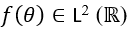
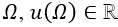
The Discrete Wavelet Transform (DWT) is used to represent quadratically integrable functions, that is, formula 1, where formula 2 is the space defined by the Formula 3 functions that satisfy the following condition (MALLAT, 2009):
The Discrete Wavelet Transform (DWT) is used to represent quadratically integrable functions, that is,,
(1)
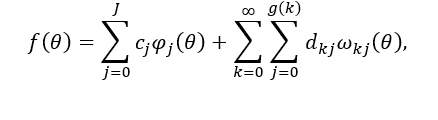
In this way, a function is represented as:
(2)
on what
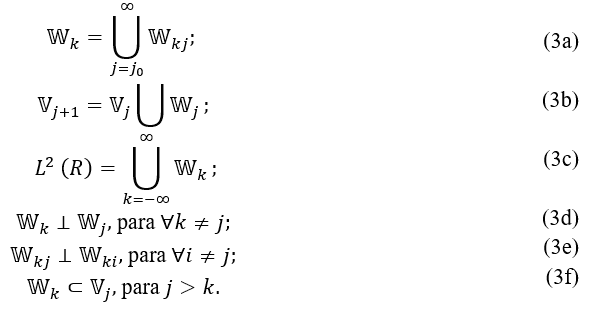
These functional spaces have the following characteristics:
The spaces ?0 and ?k are generated by (BURRUS et al., 1998):
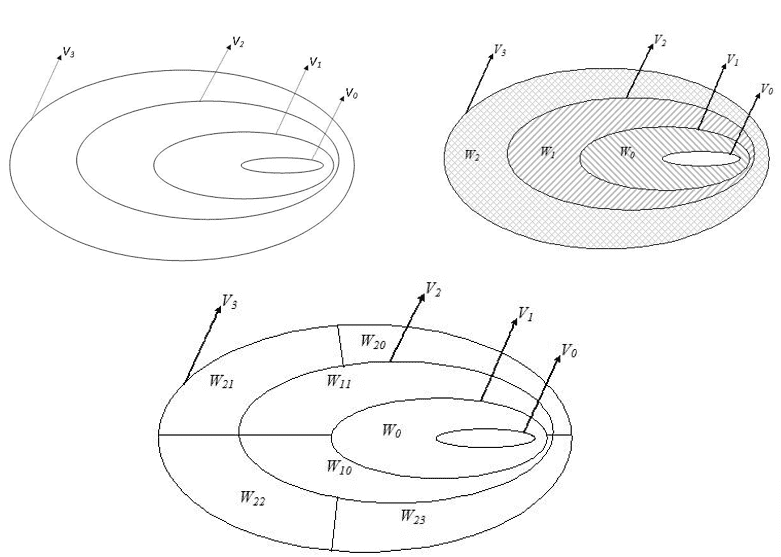
Figure 01: Relationship between spaces ?j, ?k e ?kj.
In equation (3b), and according to Figure 01, it appears that the functional space ?j is defined as the orthogonal complement of ?j about ?j+1.
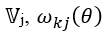
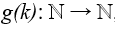
The base functions
where j and k ∈ ℕ are, respectively, translation and scaling indexers and
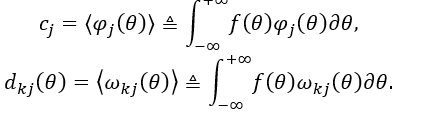
The coefficients
(6)
Although it is not a requirement to be a wavelet, in this study, the functions
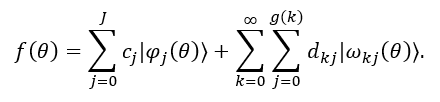
From now on, the Dirac notation (DIRAC, 1939), Bra-Ket, will be used to denote the wavelet basis functions. In fact, (2) is rewritten as:
(7)
In the present study, assumptions (P) and boundary conditions (CC) are used to establish a standard model, to be defined in the subsequent equations, and to apply to it what is verified in the known universe.
Before presenting the definition of the principle of uniqueness, it is necessary to introduce the following premise:
Premise P 01: the universe can be modeled from a single physical quantity and its variations. The aforementioned greatness is called arché, a term used by Pre-Socratic philosophers to designate the original substance (SPINELLI, 2002).
Arché and a generic image of this magnitude are denoted, respectively, as
The principle of uniqueness is defined as:
– Arché is the basic physical quantity of nature, from which the others derive;
– The physical dimensions are discrete and can be represented by orthonormal basis functions;
– The particles have their properties defined by the vector of coefficients A (whose components are associated with the mentioned functions); and
– The causes and effects that relate particles and dimensions define the laws of nature.
In effect, consider a hypothetical discrete universe for which:
–
–
–
In this study, positive and negative polarity designate, respectively,
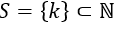
Then, it is possible to represent the k-th spatial dimension (Sk) using a basis function of the DWT
Thus, it is possible to initially define
(8)
on what
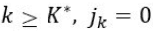
In the particular case where
In the particular case of the observed universe, K*=3.
Then,
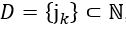
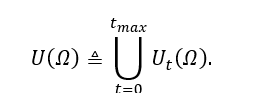
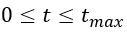
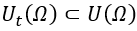
As equation (8) represents a generic point in the universe with K spatial dimensions in the subset enumerated by t, the subsets
(9)
That said, it is necessary to describe how the coefficients of A, which define the particles and are present in any element belonging
, allow the existence of a vacuum.
Boundary Condition CC 01: the empty space, the vacuum, presents intense variations of fields in reduced scales.
In fact: t is equivalent to the (discrete) dimension in which the change in the K spatial dimensions is verified, that is, it is the unit that is equivalent to Planck’s time; and the vacuum is a consequence of the random variation (non-currents) of the coefficients belonging to A in defined regions of S along
Thus, the effective identification of a particle in
(10)
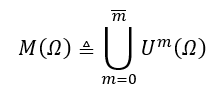
Given the modeling presented in equation (10), a hypothetical universe can be defined
(11)
Thus, space, time and particles result from interpretations, with particular approaches, of a single base structure, represented by equation (10).
to add
This model uses the mapping of parameters from String Theory (POLCHINSKI, 1998; BARBÓN, 2004; ABDALLA, 2005), or from Superstring Theory, in the description presented in equation (8). In that case:
– The amount of spatial dimensions foreseen in the String Theory variant considered, added by any dimension(s) due to the need to express parameters (such as closed strings, loops), is given by K; and
– The coefficients
Considering equations (8) and (10), the term Spaj is used in this article to designate effects of coefficients of vector A (in whole or in part) related to Sk and that define their effects in it.
Premise P 02: Spaj affects Sk, that is:
If
Boundary Condition CC 02: mass is a quantity that is conventionally positive and a source of gravity.
Following the modeling of
as, respectively, the three extended (traditional) spatial dimensions (compatible with what is seen in our physical universe) and eventual additional spatial dimensions necessary to explain properties of the universe.
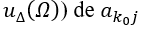
Then, given P 01, P 02, CC 01, CC 02 and the fact that gravity acts on Sk0, we have that the mass results from the components of
How
– Gravity results from the same polarity of
– Different polarities (consistent with
This proposed generalization, according to equation (10), has the potential to explain and model Cosmic Inflation (GUTH and STEINHARDT, 1984) and the effects attributed to dark matter (CORBELLI and SALUCCI, 1999; FENG, 2010) and dark energy ( RIESS et al., 1998) from the properties of
In the case of the three extended spatial dimensions, the gravitational and antigravitational actions on Sk are verified as an interpretation of:
– Gradient: the existence of
– Divergent: the existence of
The convergence of the ETQ flux has an intensity equivalent to the (discrete) curvature of space-time presented in General Relativity. In addition, the absence of said polarization results in spatio-temporal distension.
However, these models are completely arbitrary if there is no law or property that defines some limit or rule for
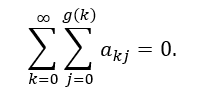
Premise P 03: the sum of the coefficients of the spatial dimensions at an instant t is zero:
(12)
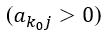
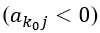
So each coefficient
Although for
Indeed, given that
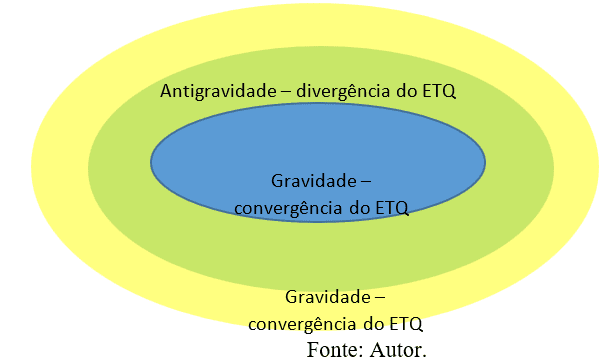
It is interesting to note that between the two regions of reversed polarities (the galaxy and dark matter) there will be antigravity in a null belt of polarities. Indeed, at the boundary of this belt with the galaxies, antigravitational forces press their periphery towards their interior, an effect of the ETQ flux from the divergence to the gradient. Then, as the modeling under construction is of the universe we observe, predictions can be made:
– Between a galaxy and the dark matter that surrounds it, there is at least a narrow region without relevant gravitational effects and, as a consequence, if there are more gravitational belts, they can also be observed through their effects, generating alternating regions with and without gravitational lensing ; and
– In the collision between galaxies, before the direct encounter of the matter that composes each one of them, the antigravitational effect will be perceptible given that the belt of
So just as it spawns between the belts
Figure 02: illustration of the actions of gravity and antigravity in a galaxy (blue): the yellow and green belts indicate, respectively, domains of dark matter and energy.
It should be noted that the
For
Similarly, the definition of natural laws verified in our universe is a particularity among the superimposed states of
It is interesting to note that the assumption of an ETQ allows for a solution to the following question.
According to General Relativity, for
The other forces found can be modeled with additional spatial dimensions and unit extension, as proposed by String Theory and its variants. But, unlike these, the proposal is that dimensions replace fields, like gravity. Indeed, take the example of the electromagnetic force.
Consider that k = 3 in equation (8) defines the actuation Spaj corresponding to the electromagnetic force. Although it is unitary in spatial extent, this is sufficient for a surface of unit thickness parallel to each spatial dimension and, as an effect, the attraction or repulsion in this parallel layer results in the acceleration of particles in the spatial dimension.
The difference between gravitational and electromagnetic Spaj is that for the latter we have:
– Identical polarities result in divergent, S3 generation; and
– Different polarities constitute gradients, contraction of S3.
Similar mechanisms can be applied to other forces (such as 3 unit dimensions for color charges, present in quarks and gluons) and other particle properties (spin, for example), provided that discrete modeling results in the continuous approximation presented in experiments and literature.
In this article, a model was proposed for the unification of Quantum Mechanics and General Relativity: space, time and matter are treated as quantum information generated by a single physical variable. The proposal can either be used to generalize String Theory (and its variants), incorporating the ETQ, as well as to establish parameters that qualify particles and their relationship with discrete space-time, modifying the conception that messenger particles intermediate the relationship between the other particles for an intermediation performed by discrete dimensional units. In the latter case, in particular, the 3 expanded spatial dimensions of the ETQ constitute the gravitational field.
Additionally, the model provides an explanation for dark matter and dark energy, presenting gravitational and antigravity sources as a natural result of the parameters that define matter and the boundary conditions verified experimentally.
Finally, verifiable effects were proposed so that the model presented can be empirically tested.
The theory proposed in this study has gaps that prevent a complete explanation that describes our universe, such as: it is not able to explain the reason why the multiplicity of possible particles to be modeled, according to equation (10), is not observed; is not structured as a proposal that answers the reason why the observed dynamics, considering the k, j and t coordinates, specifically describes formula 83 of our universe, an issue apparently related to the question of the collapse of the wave function or measurements (BASSI et al., 2013), also not addressed in this study; does not provide a solution to the singular conditions of the beginning of the universe (PENROSE, 2006); and, although it makes it possible to model particularities of the evolution of the universe, such as Cosmic Inflation, it does not present an approach to possible causes.
As proposals for future work, in addition to experiments that can prove or disprove the present study, the deduction of discrete equations (or adequacy of existing ones) from the models available in the scientific literature on the subject is indicated and, from equation (10) , verify if there is a possible correlation with the Uncertainty Principle.
For the attention and work they had, supporting me in correcting the text of this article, reviewing it and proposing suggestions, I would like to thank: Eduardo de Almeida Cadorin, Laís Santis de Oliveira, Marlanfe Michaelis Rocha de Oliveira, Michelena do Nascimento Santana, Paulo Cesar Pellanda and Saul de Oliveira Santana.
ABDALLA, Elcio. Teoria quântica da gravitação: Cordas e Teoria M. Revista Brasileira de Ensino de Física, volume 27, número 1, pág. 147 – 155, 2005. Disponível em: https://www.scielo.br/j/rbef/a/sfYbTkSRk6ZFHBd6NPg7hqn/?format=pdf&lang=pt. Acesso em 26 de julho de 2021.
BARBÓN, J. L. F. String Theory. The European Physical Journal C – Particles and Fields volume 33, pagess67–s74, 2004. https://doi.org/10.1140/epjcd/s2003-03-009-5
BASSI, Angelo et al. Models of wave-function collapse, underlying theories, and experimental tests. Reviews of Modern Physics, v. 85, n. 2, p. 471, 2013. Disponível em: https://arxiv.org/pdf/1204.4325.pdf. Acesso em 04 de fevereiro de 2022.
BOJOWALD, Martin. Quantum cosmology: a review. Reports on Progress in Physics, Volume 78, Number 2, 12 de janeiro de 2015.
BURRUS, L. Sidney, GOPINATH, R. A. e GUO, Haitao. Introduction to Wavelets and Wavelet Transforms. Prentice Hall; 1ª edição, 268 páginas, 24 de agosto de 1997.
CHIAO, Raymond Y. Conceptual tensions between quantum mechanics and general relativity: Are there experimental consequences? Cambridge University Press, Wheeler’s 90th Birthday Symposium Proceedings, 2003. Disponível em: https://arxiv.org/pdf/gr-qc/0303100.pdf. Acesso em: 25 Jul 2021.
CORBELLI, Edvige. e SALUCCI, Paolo. The Extended Rotation Curve and the Dark Matter Halo of M33. Month. Notic. Royal Astron. Soc., V. 311, Issue 2, p. 441-447, 1999. DOI: 10.1046/j.1365-8711.2000.03075.x. Acesso em: 25 jul. 2021.
DIRAC, Paul Adrien Maurice. A new notation for quantum mechanics. Mathematical Proceedings of the Cambridge Philosophical Society , Volume 35 (3), Julho 1939 , pp. 416 – 418. https://doi.org/10.1017/S0305004100021162
DOPLICHER, Sergio; FREDENHAGEN, Klaus; e ROBERTS, John E. Spacetime quantization induced by classical gravity. Elsevier, Physics Letters B, Volume 331, Issues 1–2, Pages 39-44, 30 de junho de 1994. https://doi.org/10.1016/0370-2693(94)90940-7.
EINSTEIN, Albert. Relativity: The Special and the General Theory. Three Rivers Press, Illustrated edição (CA), 208 páginas, 06 de junho de 1995.
EINSTEIN, Albert. The General Theory of Relativity. In: The Meaning of Relativity. Springer, Dordrecht, 1922. Disponível em: https://doi.org/10.1007/978-94-011-6022-3_3. Acesso em 24/07/2021.
FENG, Jonathan L. Dark Matter Candidates from Particle Physics and Methods of Detection, Ann. Rev. Astron. Astrophys. v. 48, p. 495, 2010. DOI: 10.1146 / annurev-astro-082708-101659. Acesso em: 25 jul. 2021.
FEYNMAN, R. The character of physical law. The MIT Press, London, 10ª edição, 2017 (1ª edição, 1965).
GREENE, Brian. O Universo Elegante. Companhia das Letras, 1ª edição, 29 de março de 2001.
GUTH, Alan H.; STEINHARDT, Paul J. The inflationary universe. Scientific American, v. 250, n. 5, p. 116-129, 1984.
KAKU, Michio. Hiperespaço. Editora Rocco, 2000.
KUCHA, Karel. Gravity: Foundational Questions. SCIENCE, VOL. 239, 01 de janeiro de 1988. Disponível em: https://science.sciencemag.org/content/239/4835/80 Acesso em: 26 de julho de 2021.
MALLAT, Stéphane. A Wavelet Tour of Signal Processing. Elsevier, third ed. edition, 2009.
PENROSE, Roger. Before the big bang: an outrageous new perspective and its implications for particle physics. In: Proceedings of EPAC. 2006. p. 2759-2763. Disponível em: https://wyynd.tripod.com/rp.pdf. Acesso em 04 de fevereiro de 2022.
PIATTELLA, Oliver F. O artigo fundador da teoria da relatividade restrita: Sobre a eletrodinâmica dos corpos em movimento. Cadernos de Astronomia, Vitória, v. 1, n. 1, p. 157–176, 2020. DOI: 10.47083/Cad.Astro.v1n1.31681. Disponível em: https://periodicos.ufes.br/astronomia/article/view/31681. Acesso em 24/07/2021.
POLCHINSKI, Josepholchinski. Superstring Theory and Beyond, String Theory. Cambridge University Press, Volume 1, 1998.
RIESS, Adam G.; FILIPPENKO, Alexei V.; CHALLIS, Peter; CLOCCHIATTIA, Alejandro; DIERCKS, Alan; GARNAVICH, Peter M.; GILLILAND, Ron L.; HOGAN, Craig J.; JHA, Saurabh; KIRSHNER, Robert P.; LEIBUNDGUT, B.; PHILLIPS, M. M.; REISS, David; SCHMIDT, Brian P.; SCHOMMER, Robert A.; SMITH, R. Chris; SPYROMILIO, J.; STUBBS, Christopher; SUNTZEFF, Nicholas B.; e TONRY, John. Observational Evidence from Supernovae for an Accelerating Universe and a Cosmological Constant. Astron. Journ., volume 116, pág. 1009-1038, 1998. Disponível em: https://iopscience.iop.org/article/10.1086/300499/pdf. Acesso em: 25 jul. 2021.
SCHULZ, Benjamin. Review on the quantization of gravity. arXiv: 1409,7977 [gr-qc]. Disponível em: https://arxiv.org/pdf/1409.7977.pdf. Acesso em: 25 Jul 2021.
SMOLIN, Lee. Três Caminhos para a Gravidade Quântica. Editora Rocco, 2002.
SPINELLI, Miguel. A noção de arché no contexto da Filosofia dos Pré-Socráticos. Revista Hypnos, n. 8, 2002. Disponível em: https://hypnos.org.br/index.php/hypnos/article/view/124/126. Acesso em 04 de fevereiro de 2022.
STAMATESCU, Ion-Olimpiu e SEILER, Erhard (Eds.). Approaches to Fundamental Physics, Lect. Notes Phys. Springer, Berlin Heidelberg, número 721, 2007. DOI 10.1007/978-3-540-71117-9. Acesso em: 25 jul. 2021.
[1] Doctor in Defense Engineering (focus on mechatronics), Master in Electrical Engineering (focus on control), specialist in Technological Innovation Management, graduated in Electrical Engineering and Military Sciences. ORCID: 0000-0002-9524-4643.
Sent: December, 2021.
Approved: February, 2022.
In Papillary Thyroid Carcinoma (PTC), the BRAFV600E mutation represents 90% of cases, considered a point…
Introduction: Osteoporosis and cardiovascular diseases are frequent diseases, with high morbidity and mortality, and occur…
Introduction: Hepatocellular Carcinoma (HCC) is a primary liver neoplasm and the fastest-growing cause of cancer-related…
Background: Kombucha is the fastest growing product in the beverage market and one of the…
This study was conducted in two public squares in the city of Rio de Janeiro:…
This paper presents a historical and technical analysis of the development of software based on…