CASE REPORT
SILVA, Américo Junior Nunes da [1], CORREIA, Vinícius Christian Pinho [2]
SILVA, Américo Junior Nunes da. CORREIA, Vinícius Christian Pinho. Challenges and Potentialities of Mathematics Textbooks: Reflections Based on a Teaching Case. Revista Científica Multidisciplinar Núcleo do Conhecimento. Year 10, No. 01, Vol. 02, pp. 83–102, January 2025. ISSN: 2448-0959, Access link: https://www.nucleodoconhecimento.com.br/education/challenges-and-potentialities, DOI: 10.32749/nucleodoconhecimento.com.br/education/challenges-and-potentialities
This article aims to analyze the mathematics textbooks used in a second-year high school class at a state school in Senhor do Bonfim, Bahia, during a Supervised Teaching Internship of the Mathematics Teaching Degree Program at the State University of Bahia, Brazil. The methodological approach employed textbook analysis and reflections on a teaching case as data production instruments, both interconnected. The study seeks to understand the reflective-analytical path constructed through the use of Teaching Cases as an important element in the initial training of future mathematics teachers. By creating narratives that highlight the active role of preservice teachers in specific didactic situations, the Case encouraged the intern to participate in and contribute to the analysis of the mathematics textbook used in the class where the internship took place. This process of analyzing textbooks, situated within the context of a Teaching Case, proved to be a meaningful reflective exercise in teacher training, especially by enabling an understanding of the criteria and mechanisms involved in the selection of textbooks used in schools—an understanding that clarified their potential for mathematics teaching and learning. The study concluded that many textbooks fail to contextualize concepts within the reality of Brazil’s northeastern semi-arid region, underscoring the importance of integrating this discussion into teacher education programs, so that future educators are prepared to adapt instructional materials to their regional contexts when necessary. We therefore advocate for the need for publishers to also consider these regional specificities when developing textbooks.
Keywords: Mathematics Textbook, Teaching Case, Mathematics Education, Teacher Education, Supervised Internship.
Textbooks (TBs) are important pedagogical tools that help guide educational processes, serving not only as interpreters of the curriculum but also as supports in teaching and learning pathways across various areas of knowledge (Rezat et al., 2019). In many school settings—including the one experienced during the Internship—and as noted by Bittar (2017), textbooks are the most commonly used instructional material by teachers, particularly for supporting didactic situations in basic education. This raises important questions: How are textbooks selected in the partner schools that host student teachers? Are [future] mathematics teachers prepared for this task?
These questions emerged from experiences during the Supervised Teaching Internship (STI), when issues related to the selection and analysis of textbooks by the partner school surfaced as a problem brought up by student teachers. In response, the university supervisor decided to work with Teaching Cases. The concerns raised by this activity—especially upon realizing that this was a situation future teachers would likely face once they assumed teaching responsibilities after graduation—sparked both worry and engagement. This was particularly evident given that the topic had not yet been addressed, despite being the focus of numerous studies in the field of Mathematics Education, as highlighted by Perovano, Guimarães, and Litoldo (2022) and Mazzi et al. (2024).
From these studies, we understand that the textbook “is not the only material, but it is the main one used by teachers in lesson planning” (Bittar, 2017, p. 365). As a key guide for teaching practices in Brazilian schools, it becomes evident that preparing future mathematics teachers for this selection process is essential—especially when it comes to understanding the textbook’s role in teaching and learning pathways. This preparation must take local and regional specificities into account, aligning with the particular school culture (Bittar, 2017).
In order for textbooks to meet the demands of a particular school culture, it is essential not only to understand this context and its curriculum deeply but also to grasp the criteria for evaluating such materials. Teachers in each subject area should therefore conduct a thorough study and analysis of the textbooks already approved by the National Textbook Program (PNLD), which are required to meet a set of criteria: compliance with legislation, guidelines, and standards for high school education; ethical and democratic principles; coherence of the theoretical-methodological approach; respect for interdisciplinary perspectives; accuracy and currency of concepts, information, and procedures; characteristics and purpose of the teacher’s manual; and alignment with the didactic-pedagogical objectives of the work (Brazil, 2017). As emphasized by Rosa, Ribas, and Barazzutti (2012, p. 1), “It is necessary to be familiar with the approach and methods used to teach certain concepts. Therefore, it is important to analyze the characteristics of textbooks in order to understand their structure and possible applications.
Recognizing the importance of textbooks and the need for teacher education to support their proper selection, the supervisor of the Supervised Internship—also the author of this manuscript—proposed an analysis of the textbooks to be used during the Supervised Teaching Internship of the Mathematics Teaching Degree Program at the State University of Bahia (Uneb), Campus VII, in the first semester of 2022.1. Thus, the internship is also acknowledged as a crucial moment for teacher education and the development of professional identity (Pimenta, 2009; Silva, 2020).
This work aims to present the textbook analysis conducted with the goal of understanding this reflective-analytical process as an important aspect of the initial training of future mathematics teachers. It is important to highlight that this analysis was guided by the framework developed by Rosa, Ribas, and Barazzutti (2012). Another point to note is that throughout the writing, we adopt different verb tenses. This shift reflects the specific nature of this report and its reflective character, particularly given that it stems from an experience developed through a Teaching Case.
To construct this text, we analyzed the mathematics textbooks used by a second-year full-time high school class at a state school in Senhor do Bonfim, Bahia. This analysis was prompted by a Teaching Case that placed us in the role of a novice mathematics teacher responsible for selecting the textbook at the beginning of the school year. However, the case raised concerns, as, like the character in the scenario, many student teachers were unfamiliar with the institutional procedures that guide textbook selection—or even with the criteria involved—despite being in the final semester of their program and about to begin their professional teaching careers.
The case was based, as Mizukami et al. (2002) argue, on the contemporary demands for a new profile of education professionals—teachers who not only master the content they teach and do so effectively, but who are also capable of addressing students’ specific needs by considering cognitive, social, cultural, and other factors. The reflective questions raised by this activity made it possible to identify these concerns as real problems and seek potential solutions, which were later presented and discussed in class during collective sessions held at the university. Below is the description of the proposed Teaching Case:
Case 01 – “How Is a Mathematics Textbook Chosen?”
We understand Teaching Cases, as defined by Mizukami (2000), as important tools for fostering reflective processes and supporting teachers in the (re)construction of professional teaching knowledge. According to Roesch (2007), Teaching Cases are academic texts that follow an analytical-linear structure, using a temporally segmented narrative. Agapito and Hobold (2021) further argue that these cases serve as both formative tools and spaces for research.
Reflection, therefore, plays a central role in this text, especially as it is considered a crucial element in learning to teach and in professional development. It enables the construction of meaning and the articulation of significance throughout the teacher’s life, ensuring connections between initial training, continuing education, and lived experiences (Mizukami et al., 2002, p. 16). In this sense:
Reflection emerges as the element that allows teachers to connect the different types of knowledge they possess, arising from various stages of their professional development—including their experience as students, their teaching practice, and their ongoing education (Duek, 2020, p. 03).
Thus, this work develops from the Teaching Case and the reflections it generated, which guide the discussion and analyses, as well as from the adaptation of the analysis framework to the Thematic Units. In the next section, we will present the narrative based on the Teaching Case discussed above.
Before beginning the analysis of reflections on the Teaching Case regarding the textbook, it is important to highlight that other issues addressed and also subject to reflection—such as those raised in the first stage of the case—were presented in the initial sections of this text. In this section, we specifically chose to focus on the analysis corresponding to the second stage of the proposed Teaching Case.
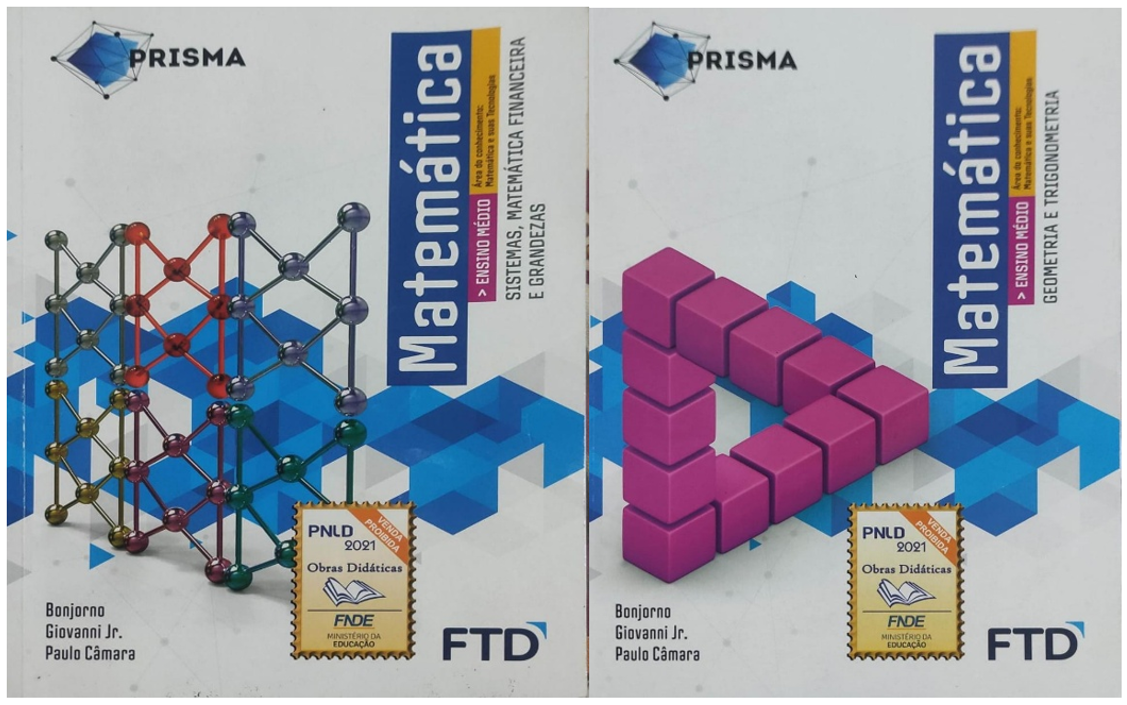
To conduct the analysis of the textbooks to be used during the internship, we requested some copies from the partner school. Until the time of the last internship, we had not performed such a detailed and guided analysis of the textbooks prior to starting teaching activities. Initially, we identified the titles of the works: Prisma Matemática: Geometria e Trigonometria e Prisma Matemática: Sistema, Matemática Financeira e Grandezas, authored by José Roberto Bonjorno, José Ruy Giovanni Júnior, and Paulo Roberto Câmara de Sousa. These are the first editions of these books, intended for the second year of high school, published by FTD, São Paulo, in 2020.
From this analysis, we observed the distribution of the fields of School Mathematics according to the Base Nacional Comum Curricular (BNCC). At first, we noticed that each book did not cover all fields of Mathematics. Later, we understood that for the grade level under analysis, two textbooks were used, each addressing different fields.
For this article, we will refer to the analyzed textbooks as Book A and Book B. Book A covers the fields of Arithmetic, Algebra, and Measurement and Magnitudes (corresponding to the contents of System, Financial Mathematics, and Magnitudes, as indicated on the book cover). Book B, in turn, covers the fields of Geometry and Trigonometry.
Figures 1 and 2 – Covers of the Analyzed Textbooks for the Second Year of High School, Book A and Book B respectively
When conducting an initial analysis of the knowledge fields covered in each chapter of the textbooks, we observed that Book A focuses on Arithmetic, while Book B deals with Geometry. We verified that the content presented in both books is aligned with the BNCC (Brazil, 2017). Furthermore, the contents in each book are presented in an integrated manner, providing a cohesive view of the subject.
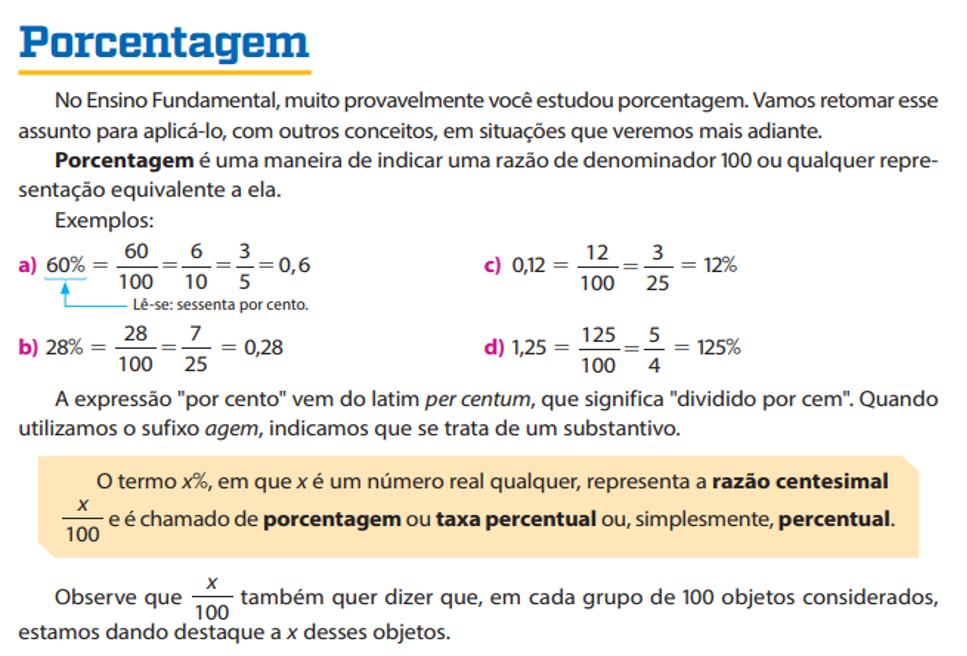
How are methodology and contextualization presented in these materials? According to the case guidelines, we chose two topics, one from each textbook: in Book A, we selected “Percentage and Interest”; in Book B, “Proportionality and Similarity.” These topics were chosen mainly because they are concepts we will explore during our teaching practice in the internship. Thus, we sought to gain a deep understanding of the textbooks in order to use them more effectively in our classes, as emphasized by Bittar (2017).
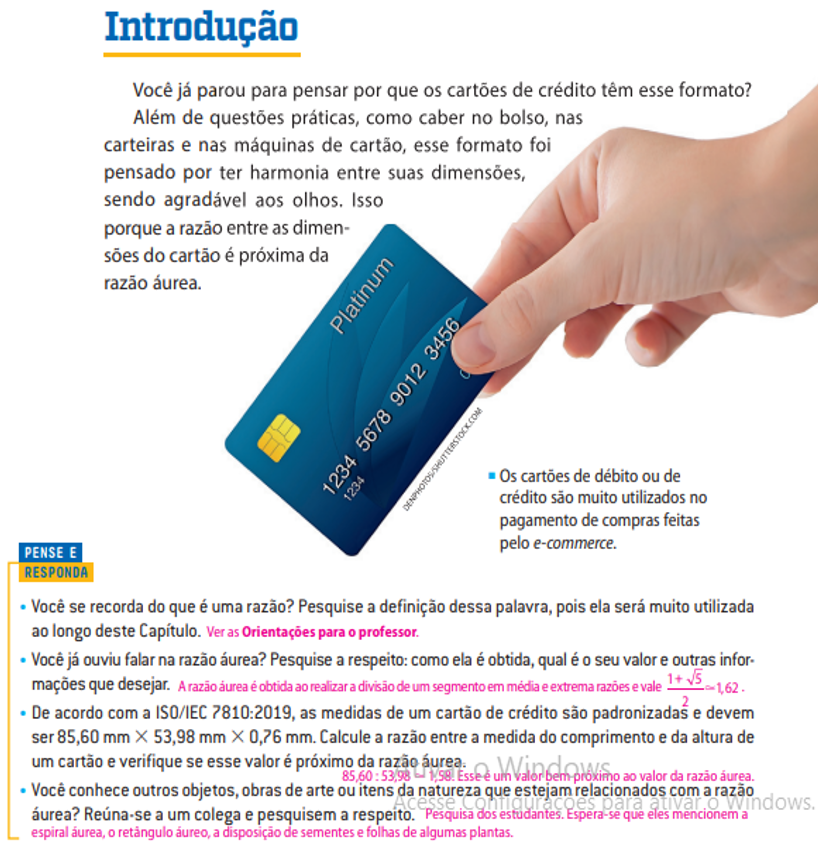
The textbooks present initial contextualizations for the topics covered. Each chapter begins with an introduction to the theme, followed by a brief historical reflection, development of the content, and the proposal of both solved and unsolved exercises. Additionally, they include sections called “Did You Know?” and “Think and Answer,” which we consider important for encouraging students to reflect on the studied content and relate it to situations from their daily lives. Below, we present an example of what is described in Figure 3.
Figure 3 – Excerpt from Book B: Introduction to the topic of Proportionality with a curiosity box
These constructions, like those previously presented, are important for bringing students closer to mathematical knowledge. They allow, as D’Ambrosio (1993) suggests, for Mathematics to be understood as a field of inquiry and help to value the joy of discovery, reframing the idea that learning Mathematics is merely about repeating exercises. In many of these situations, we observed a revisiting of prior knowledge that is essential for the development of new content. In Book A, for example, we found activities aimed at reviewing concepts from elementary school, as illustrated in Figure 4 below:
Figure 4 – Excerpt from Book A: Probability Content
When examining the exercises proposed in the textbooks, we noticed that they are well designed and contextualized within a given reality. Although some are not fully connected to the reality of the Brazilian semi-arid region, they are still relevant to the development of a citizen in a globalized and constantly evolving society. This reminds us of the reading by Samacá Alonso (2011), who views the textbook as a cultural vector that conveys values within society. In many of these activities, students are invited to take on a leading role by reflecting on the processes of mathematization, encouraging them to explore different problem-solving strategies.
However, we also identified many exercises that focused on memorization through the repetition of similar problems, following a “do as I do” approach. We did not find any inconsistencies, from the content development to the exercises themselves. We believe this is largely due to the fact that two textbooks are used for the same grade level, which allows for a broader approach and a more in-depth development of the concepts.
Regarding teacher-student and peer interaction, we observed that the textbooks encourage collaborative activities and involve teachers as facilitators of the teaching-learning process. This became more evident in our analysis of the activities in the “Connections” section, which proposes discussions both in the classroom and among students, with the support of the teacher (as illustrated in Figures 10 and 11).
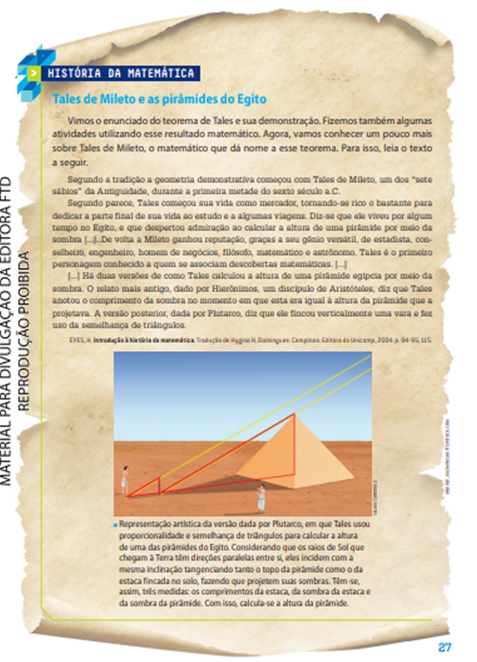
Furthermore, when examining the suggested methodologies and the use of other teaching resources, we found that the books encourage the adoption of various approaches in the classroom, as evidenced in Figure 5 below:
Figure 5 – Excerpt from Book B: History of Mathematics
There are teachers, such as the one from the class observed during the internships, who use the lecture-based lesson as their main methodology and rely on the textbook to plan these lessons, as Bittar (2017) pointed out. We believe that the inclusion or suggestion of other teaching strategies in the textbook can be crucial to encourage the adoption of different methodologies and resources, provided these are available at the school.
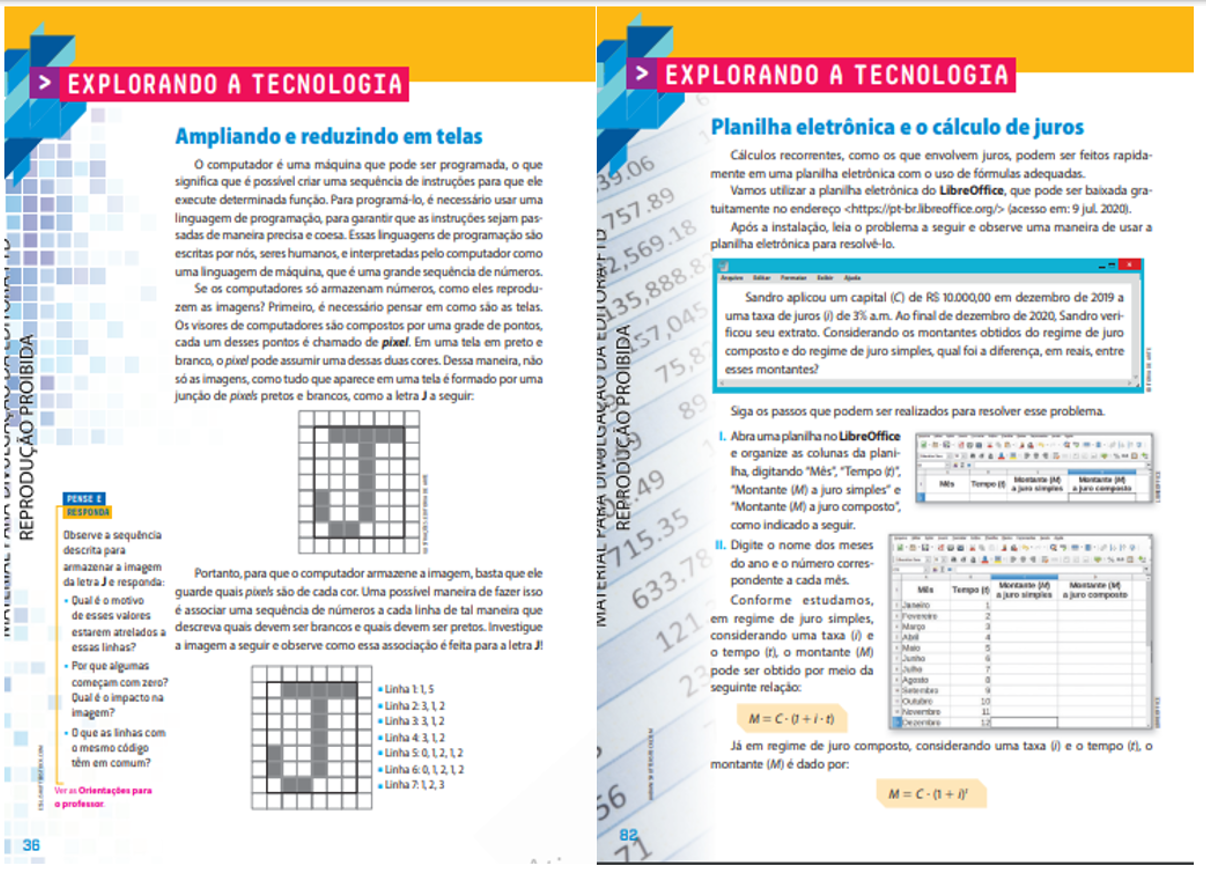
Furthermore, the textbook includes a section dedicated to the use of technology, entitled “Exploring Technology”, which aims to provide students with a deeper understanding of mathematical concepts and the development of computational thinking, with or without the aid of digital technologies. See Figures 6 and 7 below:
Figures 6 and 7 – Excerpts from Textbooks A and B, respectively, showing the “Exploring Technology” section
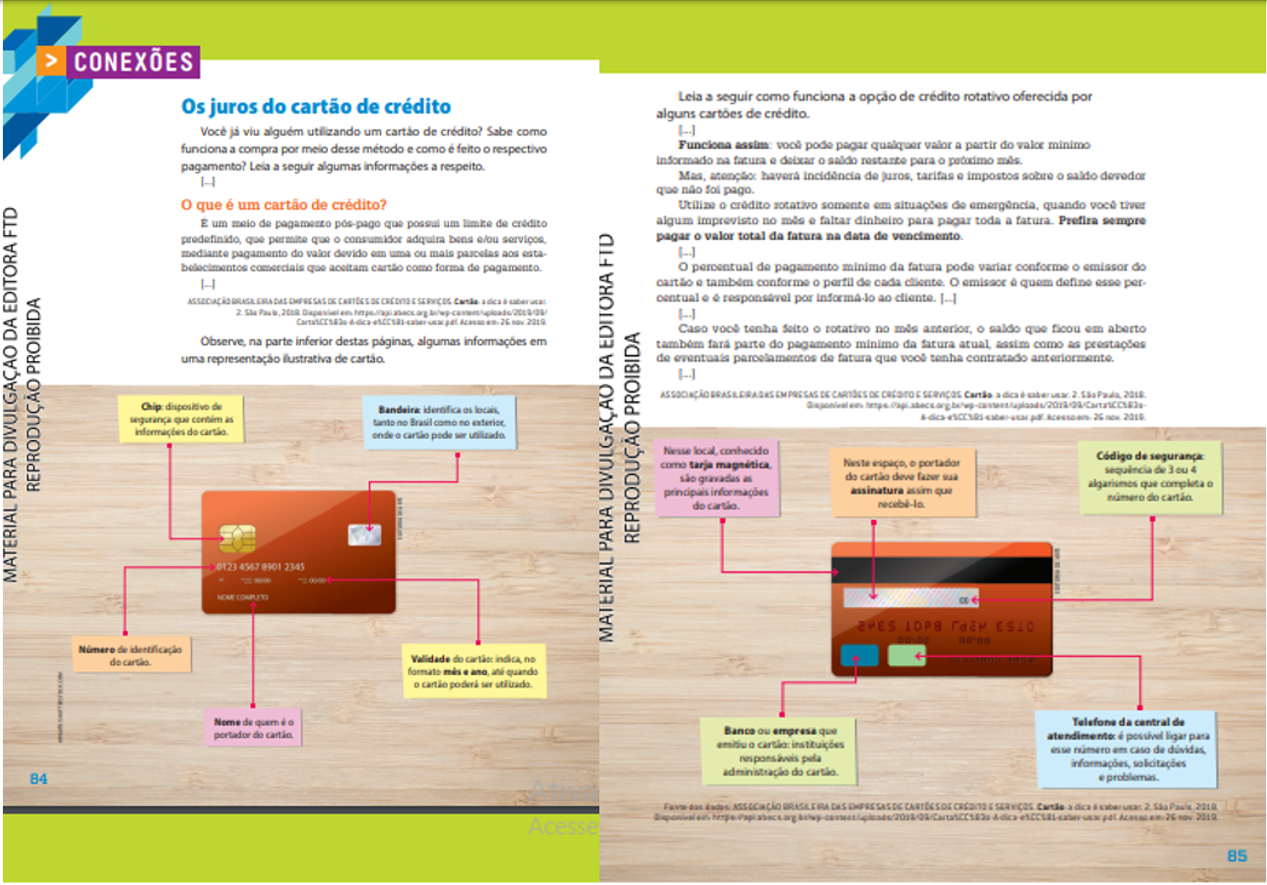
Another section that also plays this role of offering different pathways for the teaching and learning of Mathematics is called “Connections.” This section aims to relate the mathematical concepts covered to everyday situations, as illustrated in Figures 8 and 9 below:
Figures 8 and 9 – Excerpt from Book B: “Connections” section presents information about credit cards
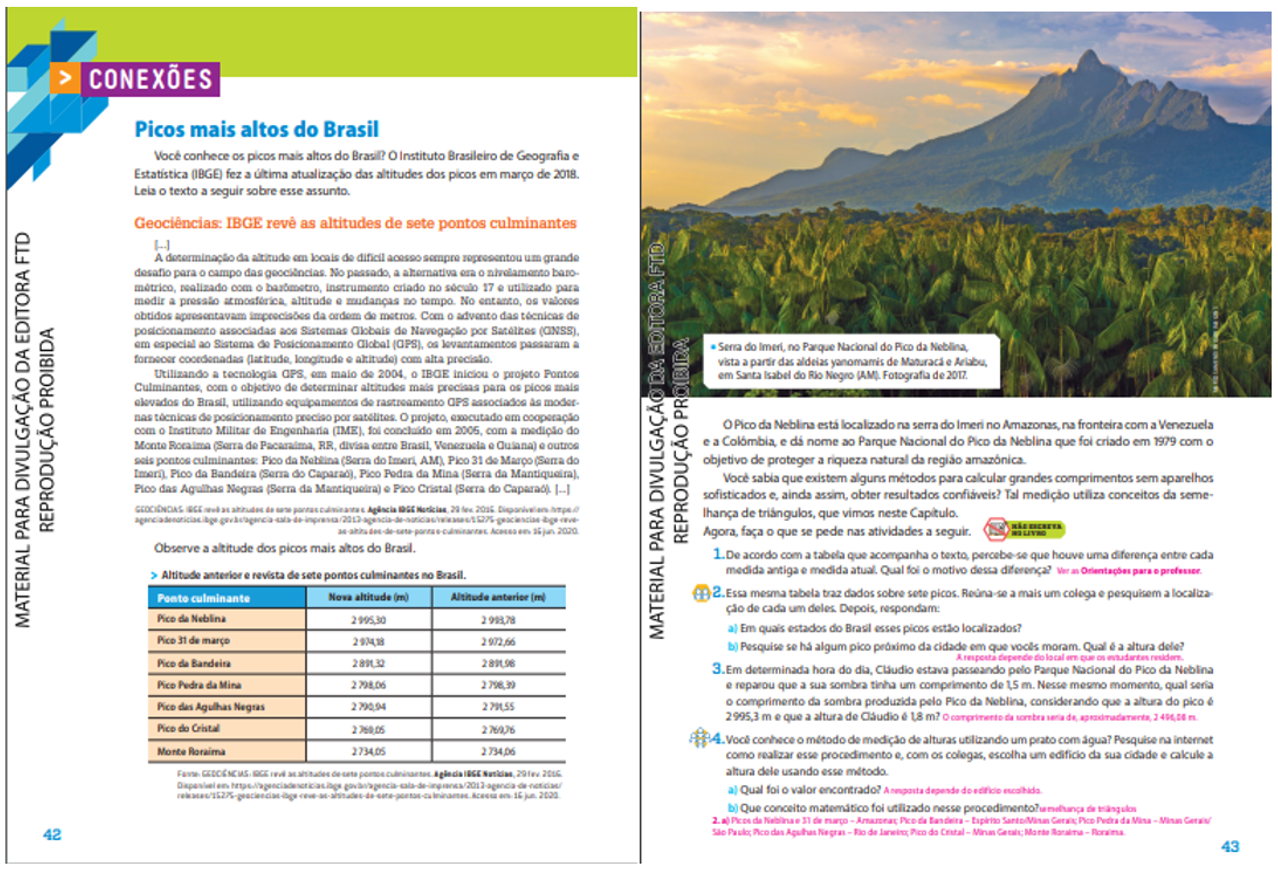
Finally, we analyzed whether contextualization was present in the textbooks in relation to social practices and/or other fields of knowledge. Based on our analysis, we observed that the books dedicate a section to this focus, aiming to develop citizenship skills and critical thinking. They encourage students to engage in investigation and research practices, as well as to promote interaction and group discussion. This aspect is clearly illustrated in Figures 10 and 11 below:
Figures 10 and 11 – Excerpt from Book B: “Connections” section on Proportionality and Similarities
This article addressed the analysis of the textbooks used in the 2nd year of high school at a state school in Senhor do Bonfim-BA, with the aim of understanding the importance of the process of selecting and analyzing these materials in the context of the initial training of Mathematics teachers. Through a Teaching Case developed during the Supervised Teaching Internship IV of the Mathematics Teaching Degree program at the State University of Bahia (Uneb), we explored the practices and methodologies involved in the selection of textbooks, reflecting on how these materials can impact teacher education, teaching practice, and the teaching-learning process in Mathematics.
The analysis of the textbooks revealed how these materials address the fields of School Mathematics and how they align with the National Common Curricular Base (BNCC). We observed that the books divide the fields of Mathematics among them, with Book A focused on Arithmetic, Algebra, and Measurements, and Book B on Geometry and Trigonometry. The detailed analysis of the content and methodologies presented in the books showed an attempt to articulate mathematical knowledge with everyday situations and social practices, which is fundamental for the formation of critical citizens.
The importance of selecting and analyzing the textbook for the Mathematics teaching-learning path was one of the main conclusions of this study. We found that textbook analysis goes beyond simply choosing material; it involves understanding how the book aligns with curricular objectives and how it can contribute to the development of both mathematical and transversal competencies in students. The analysis revealed that, although the textbooks presented cover the content in a structured manner and in line with the BNCC, there is also a need to pay attention to regional and cultural specificities to ensure that the materials are relevant and allow a deeper look into the reality that students experience daily.
The analysis of the textbooks indicated that, despite a robust and well-structured approach, there is still the use of exercises focused on memorization. The presence of sections such as “Exploring Technology” and “Connections” in the books showed an effort to incorporate diverse and contextualized methodologies, which are crucial for the development of mathematical competencies and for integrating knowledge with students’ everyday lives.
This study highlighted the importance of incorporating discussions about the selection and analysis of textbooks into the initial training of teachers. Theoretical and practical experience, along with critical reflection on didactic materials, is essential for future teachers to make informed decisions about the resources they will use in their Mathematics classes. The in-depth analysis of the textbooks contributed to a better understanding of the selection criteria and the implications of these materials for pedagogical practice—something that resonated in the experiences of the Supervised Teaching Internship during the academic semester.
In short, the textbook analysis carried out in this study enabled us to reflect on their use and allowed us to better understand their potential for the teaching and learning of Mathematics. Although many textbooks do not contextualize concepts with the reality of the semi-arid Northeast region, we recognize the importance of integrating this discussion into teacher education programs. This prepares teachers to adapt didactic material to their regional realities. We advocate the need for publishers to take these regional specificities into account when developing textbooks, in order to better address our local contexts.
AGAPITO, J.; HOBOLD, M. de S. Casos de ensino nas pesquisas sobre formação de professores. Roteiro, [S. l.], v. 46, p. e27212, 2021. DOI: 10.18593/r.v46.27212. Disponível em: https://periodicos.unoesc.edu.br/roteiro/article/view/27212. Acesso em: 28 mar. 2023.
BRASIL. PNLD 2018: matemática – guia de livros didáticos-Ensino Médio. Secretaria de Educação Básica – SEB – Fundo Nacional de Desenvolvimento da Educação. Brasília, DF: Ministério da Educação, Secretaria de Educação Básica, 2017.
BITTAR, M. A Teoria Antropológica do Didático como ferramenta metodológica para análise de livros didáticos. Zetetiké, Campinas, SP, v.25, n. 3, set./dez.2017, p.364-387.
BONJORNO, J. R.; GIOVANNI JÚNIOR, J. R.; SOUSA, P. R. C. Prisma Matemática: Sistema, Matemática Financeira e Grandezas. 1ª edição, editora FTD, São Paulo, 2020a.
BONJORNO, J. R.; GIOVANNI JÚNIOR, J. R.; SOUSA, P. R. C. Prisma Matemática: Geometria e Trigonometria. 1ª edição, editora FTD, São Paulo, 2020b.
D’AMBROSIO, B. Formação de professores de matemática para o século XXI: o grande desafio. Pro-Posições, v. 4, n. 1, p. 35-41, 1993.
DUEK, V. P. Casos de ensino na formação professores: contribuições para a reflexão sobre a prática docente. Itinerarius Reflectionis, Goiânia, v. 16, n. 2, p. 01–20, 2020. DOI: 10.5216/rir.v16i2.54529. Disponível em: https://revistas.ufg.br/rir/article/view/54529. Acesso em: 28 mar. 2023.
MAZZI, L. C.; AMARAL, R. B.; PEROVANO, A. P.; VIEIRA ANDRADE, L. Understanding the textbook: Reflections in the field of mathematics education. Revista Baiana de Educação Matemática, [S. l.], v. 5, n. 1, p. e202407, 2024. DOI: 10.47207/rbem.v5i1.19689. Disponível em: https://www.revistas.uneb.br/index.php/baeducmatematica/article/view/19689. Acesso em: 30 jun. 2024.
MIZUKAMI, M. G. N. Casos de ensino e aprendizagem profissional da docência. In: ABRAMOWICZ, A.; MELLO, R. R. (Org.). Educação: pesquisas e práticas. Campinas: Papirus, 2000. p. 139-161.
MIZUKAMI, M. G. N. et al. Escola e aprendizagem da docência: processos de investigação e formação. São Carlos: EdUFSCar, 2002.
PEROVANO, A. P; GUIMARÃES, D. R; LITOLDO, B. F. Análise do Livro Didático de Matemática no Third International Conference on Mathematics Textbooks Research and Development: Perspectivas e Possibilidades de Pesquisa. ALEXANDRIA: R. Educ. Ci. Tec., Florianópolis, v. 15, n. 2, p. 237-261, novembro. 2022
PIMENTA, S. G. Formação de professores: identidade e saberes da docência. In:
PIMENTA, Selma Garrido. (Org). Saberes pedagógicos e atividade docente. São Paulo: Cortez Editora, 2009.
PNLD 2020. Tire todas as suas dúvidas. FTD Educação, 2020. Disponível em: https://pnld2020.ftd.com.br/post/como-funciona-o-pnld#:~:text=O%20Programa%20Nacional%20do%20livro,redes%20federal%2C%20estaduais%2C%20municipais%20. Acesso em: 22 abr. 2022.
REZAT, S.; FAN, L.; HATTERMANN, M.; SCHUMACHER, J.; WUSCHKE, H. (org.). Proceedings of the Third International Conference on Mathematics Textbook Research and Development (ICMT-3). Paderborn, Germany: Universitätsbibliothek Paderborn, 2019.
ROESCH, S. M. A. Notas sobre a construção de Casos de Ensino. RAC, v. 11, n. 2, Abr./Jun. 2007: 213-234.
ROSA, C. P. RIBAS, L. C. BARAZZUTTI, M. Análise de Livros Didáticos. In: III Escola de Inverno de Educação Matemática e I Encontro Nacional de PIBID – Matemática, 2012, Santa Maria – UFSM. 2012.
SAMACÁ ALONSO, G. D. Los Manuales Escolares como Posibilidad Investigativa para la Historia de la Educación: Elementos para una Definición. Revista Historia de la Educación Latinoamericana, [s.l.], s.v., n. 16, p. 199-224, 2011.
SILVA, A. J. N. “Prática” e “Estágio Supervisionado” na formação de professores: o que revela um curso de Licenciatura em Matemática da UNEB? Revista de Educação Matemática, [s. l.], v. 17, p. e20034, 2020. DOI: 10.37001/remat25269062v17id390. Disponível em: http://www.revistasbemsp.com.br/index.php/REMat-SP/article/view/156. Acesso em: 1 jul. 2024.
The authors used the artificial intelligence tool ChatGPT (“version not identified on the platform”) for grammatical correction, focusing on punctuation and agreement issues. However, all searches for content, article quality assessment, discussions, and analyses that make up the text in its entirety were conducted independently by the authors.
[1] PhD in Education from the Federal University of São Carlos. ORCID: https://orcid.org/0000-0002-7283-0367. Currículo Lattes: http://lattes.cnpq.br/5104791370402425.
[2] Specialist in Mathematics Teaching and Pedagogical Practices from Faculdade Única – Grupo Prominas. ORCID: https://orcid.org/0000-0001-9938-9578. Currículo Lattes: http://lattes.cnpq.br/899761286777693.
Material received: July 10, 2024.
Peer-reviewed material approved: September 13, 2024.
Edited material approved by the authors: December 30, 2024.
In Papillary Thyroid Carcinoma (PTC), the BRAFV600E mutation represents 90% of cases, considered a point…
Introduction: Osteoporosis and cardiovascular diseases are frequent diseases, with high morbidity and mortality, and occur…
Introduction: Hepatocellular Carcinoma (HCC) is a primary liver neoplasm and the fastest-growing cause of cancer-related…
Background: Kombucha is the fastest growing product in the beverage market and one of the…
This study was conducted in two public squares in the city of Rio de Janeiro:…
This paper presents a historical and technical analysis of the development of software based on…